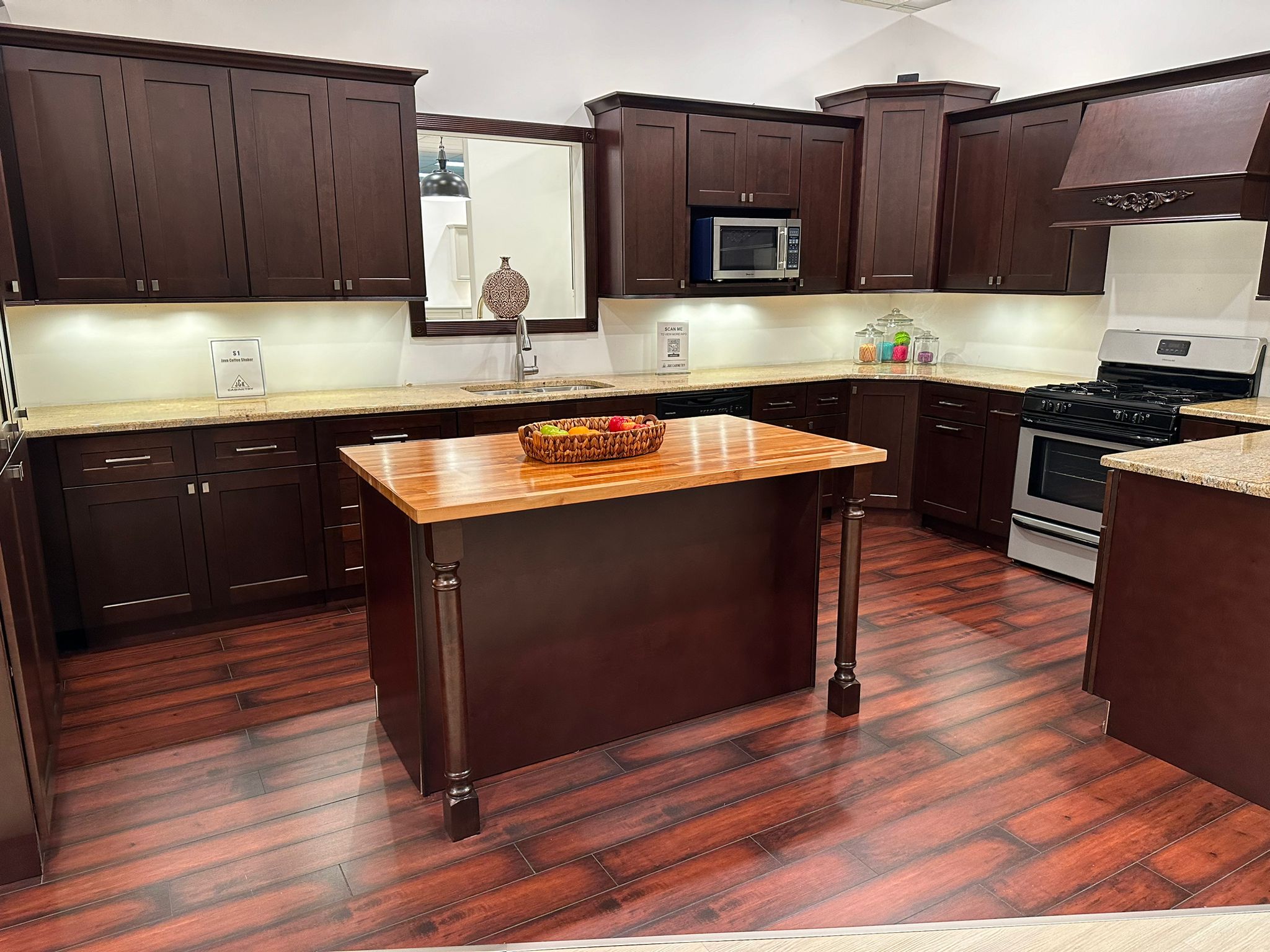
Kitchen Cabinet Styles for San Antonio Homes: How to Choose the Right Look, Material, and Finish

Browsing kitchen cabinet styles San Antonio homeowners love online is easy. Actually choosing a style for your specific home is much harder. You’re not just picking a door profile — you’re deciding on a finish, a color, a hardware style, and how all of those elements work with your countertops, backsplash, flooring, and the overall character of your home.

San Antonio homeowners face a genuinely interesting challenge here. The city has an unusually diverse mix of home styles. Spanish Colonial homes in King William. Hill Country ranch builds in Boerne and Helotes. Modern townhomes near the Pearl District. Traditional suburban layouts throughout Stone Oak, Schertz, and Cibolo. No single cabinet style fits all of these contexts.

This guide walks you through how to choose kitchen cabinets in San Antonio the right way — starting with style fundamentals and working through to the specific decisions that determine how your finished kitchen will look and function.

What “Kitchen Cabinet Style” Actually Means

When designers and retailers talk about cabinet style, they usually mean the door profile. But that’s just the starting point. A complete cabinet style decision involves four layers:

  1. Door profile — The physical shape of the cabinet door. This is where terms like Shaker, raised panel, flat panel, and beadboard come from.
  2. Finish type — Painted, stained, glazed, or natural. Painted cabinets dominate the San Antonio market right now. Stained wood finishes are more popular in Hill Country-adjacent neighborhoods.
  3. Color palette — White, off-white, gray, navy, green, wood tone. Color trends shift, but some choices have proven their longevity in the resale market.
  4. Hardware — Pulls, knobs, and hinges. Hardware can modernize a traditional cabinet or warm up an otherwise cold modern look.

All four need to work together. A Shaker door in a painted finish with brushed brass hardware reads very differently from the same door profile in a stained finish with oil-rubbed bronze hardware.

The 5 Cabinet Styles San Antonio Homeowners Choose Most

1. Shaker Style

Shaker is the defining cabinet style of the current era. The five-piece door with a flat center panel and clean square edges has been popular for over a decade, and it hasn’t burned out. Part of the reason is its versatility — Shaker cabinets work in traditional kitchens, transitional kitchens, and modern farmhouse designs. They pair with virtually any countertop material.

In San Antonio, white painted Shaker cabinets remain the top request. Two-tone applications — white Shaker uppers meeting a painted lower cabinet in navy, green, or charcoal — have grown consistently popular over the past few years.

Browse Shaker kitchen cabinet options at Cabinet Bazaar to see the full range of door profiles, painted finishes, and stain options currently available.

2. Raised Panel

Raised panel cabinets have a center panel that projects outward from the door frame. This creates depth and shadow lines that give the kitchen a more formal, traditional look. They pair naturally with granite countertops, ornate hardware, and decorative range hoods.

Raised panel cabinets are particularly popular in older San Antonio neighborhoods and in homes with more formal architectural detail. If your home has crown moldings, arched doorways, or decorative tilework, raised panel tends to feel more at home than flat alternatives.

3. Flat Panel (Slab)

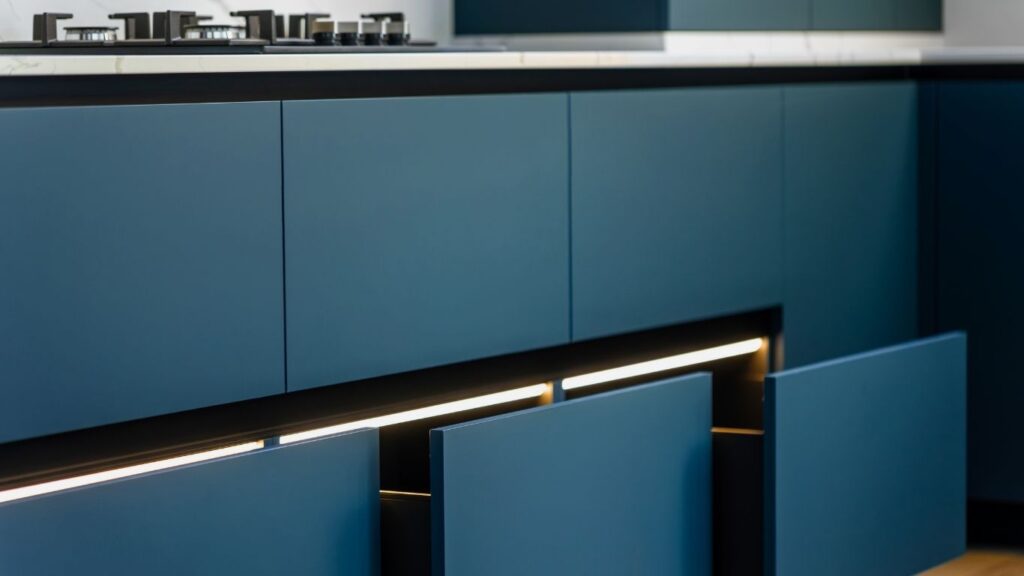
Flat panel, or slab-style, cabinets have no frame detailing — the door is a single flat surface. This style is the foundation of modern and contemporary kitchen design. Paired with integrated handles, handleless push-to-open hardware, or thin bar pulls, slab cabinets create a very clean, European-inspired look.

This style has gained traction in newer San Antonio developments and in open-concept homes where the kitchen flows into living areas. The minimal design can read as cold if not balanced with warm materials elsewhere in the space.

4. Beadboard

Beadboard cabinets feature vertical groove detailing on the door panel. They’re associated with cottage, farmhouse, and coastal aesthetics. In San Antonio, beadboard works well in older craftsman-style homes or in kitchens going for a relaxed, casual feel. Less common in contemporary builds.

5. Glass Front Cabinets

Glass front cabinets aren’t a door profile on their own — they’re a variation applied to any style. Replacing solid door panels with glass panes on upper cabinets adds visual interest, makes a kitchen feel more open, and lets you display dishes or glassware. This works best when the interior of the cabinet is well-organized and attractively stocked.

According to the National Kitchen and Bath Association (NKBA), Shaker and transitional styles consistently rank as top choices in kitchen remodels across the U.S. — a trend that holds especially true in Texas markets.
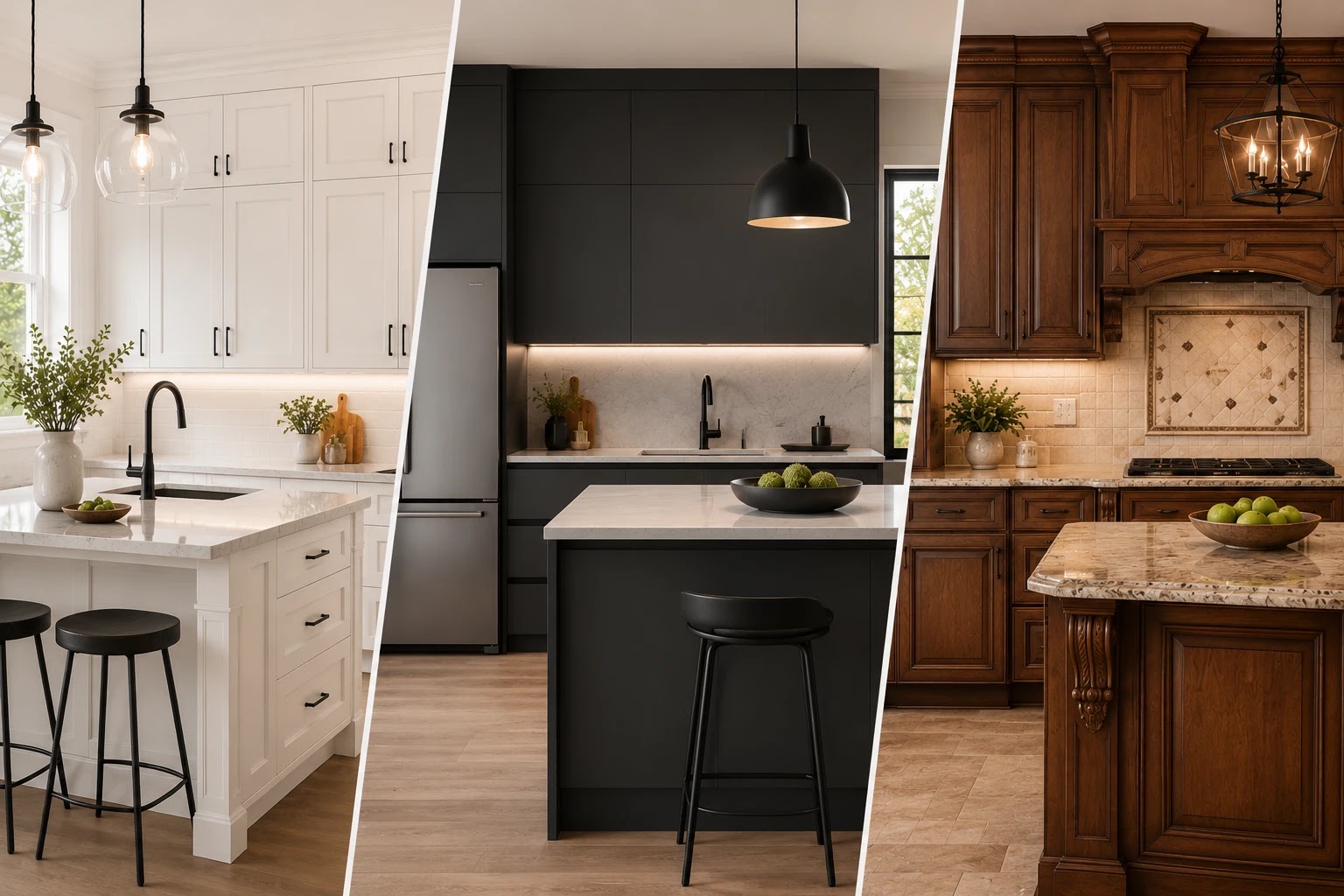
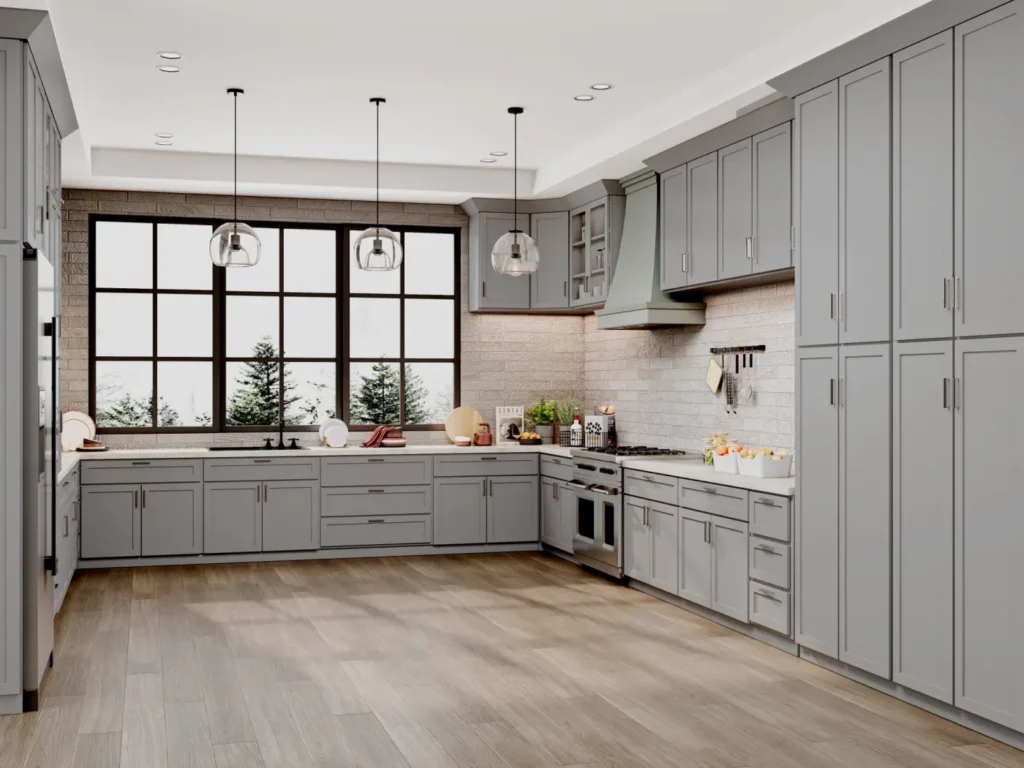
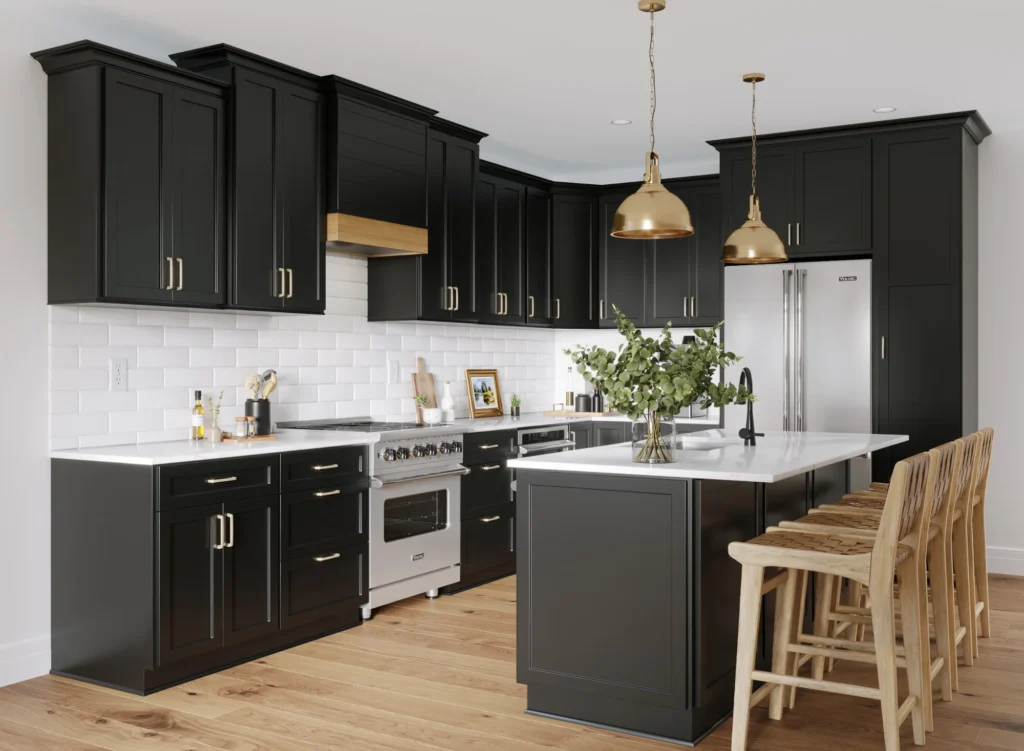
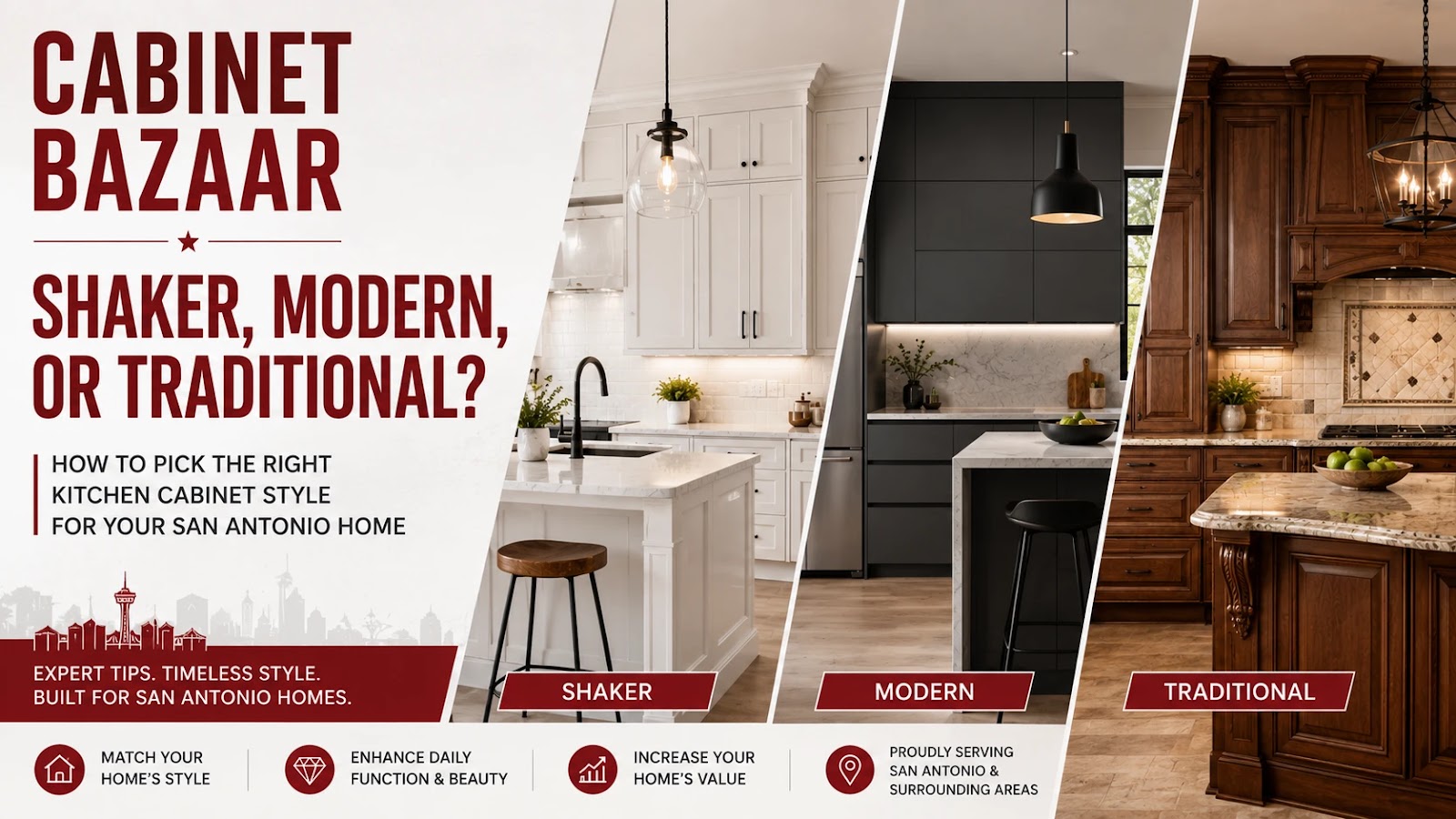
Shaker vs modern vs traditional kitchen cabinet design comparison

Cabinet Finish and Color Guide for Texas Kitchens

Color is the single biggest visual decision in a kitchen remodel. Here’s how the most common choices play out in San Antonio homes:

Color Best Fit Resale Consideration
White Any home style, any size kitchen Strongest resale appeal
Gray / Greige Contemporary and transitional homes Strong, neutral appeal
Navy Blue Larger kitchens with good natural light Trending; risk of dating in 5–7 years
Forest Green Homes with natural materials, wood tones Popular now; longer runway than navy
Natural Wood Tone Hill Country, ranch-style, and modern homes Timeless, especially in warm tones

If you’re not sure which direction to go, white or off-white cabinets are the safest long-term investment in the San Antonio market. They make kitchens feel larger, pair with almost anything, and appeal to the widest range of future buyers.

Hardware: The Detail That Ties Everything Together

Cabinet hardware is often an afterthought, but it does significant visual work in a kitchen. The right pull or knob can update a cabinet without replacing it. The wrong hardware on otherwise beautiful cabinets makes the whole kitchen feel unfinished.

  • Brushed nickel — Versatile and clean. Pairs well with white, gray, and greige cabinets. A safe choice that doesn’t date quickly.
  • Matte black — Popular in modern and transitional kitchens. Works especially well with two-tone cabinets and light countertops. Can look stark in very traditional kitchens.
  • Brushed brass / unlacquered brass — Warm metal tones that work beautifully with wood-stained cabinets and natural stone countertops. Growing in popularity across San Antonio.
  • Oil-rubbed bronze — Pairs well with raised panel cabinets, darker wood tones, and ornate details.
  • Satin brass — A good midpoint between traditional warmth and modern precision.

One practical note: bar pulls on lower cabinets and drawers are easier to grab than knobs, particularly with wet or greasy hands.

How to Match Cabinet Style to Your Home’s Architecture

The best kitchen remodels feel like they belong in the house. Choosing a cabinet style that conflicts with your home’s architecture creates a result that never quite looks finished.

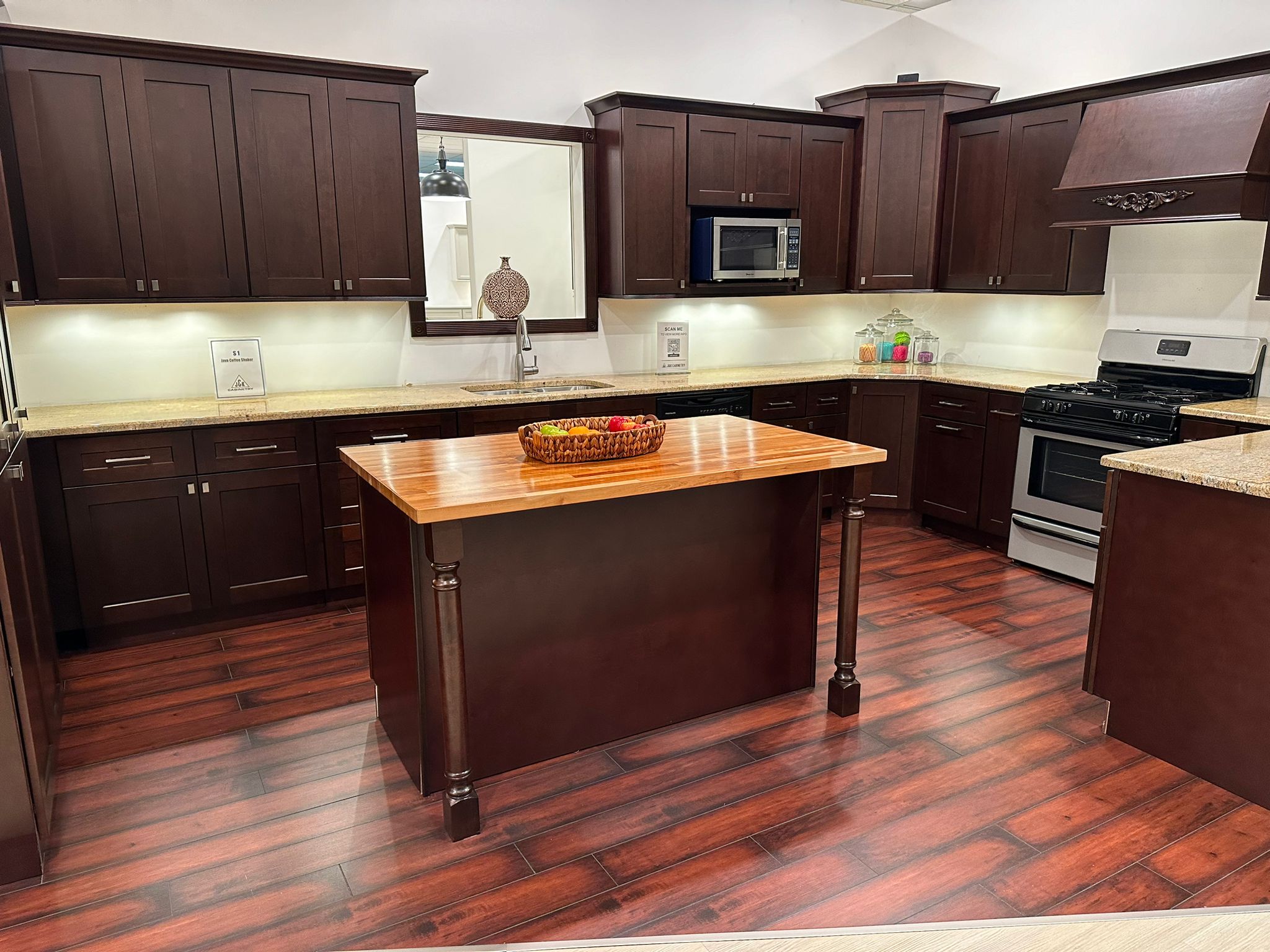
  • Spanish Colonial or Mediterranean — Raised panel cabinets in warm wood tones or off-white painted finishes. Arch details and ornate hardware complement these homes. Avoid ultra-modern flat panel options.
  • Hill Country Ranch — Natural wood tones, knotty alder, or painted cabinets in warm whites and earthy greens. Simple hardware profiles. The goal is organic warmth.
  • Traditional suburban (Stone Oak, Helotes, New Braunfels) — Shaker or raised panel in white or soft gray. Classic hardware in brushed nickel or oil-rubbed bronze. These kitchens need to appeal to a broad resale audience.
  • Modern and contemporary builds — Flat panel cabinets in white, charcoal, or natural wood. Thin bar pulls or handleless doors. Clean, integrated appliances.
  • Craftsman and bungalow — Beadboard or simple Shaker. Painted in warm whites or warm grays. Ceramic or glass knobs can look appropriate here.

Cabinet Storage Features Worth Paying For

Style matters, but the kitchen you actually enjoy living in is one that functions well every day. These storage features consistently make a real difference in kitchen usability:

  • Pull-out shelves in base cabinets — Eliminates the need to kneel and dig through deep lower cabinets. One of the most appreciated upgrades in any remodel.
  • Soft-close hinges and drawer slides — Doors and drawers close quietly and don’t slam. Standard in quality cabinets — worth requesting specifically if it’s not offered.
  • Deep drawer banks — Replacing lower cabinet doors and shelves with deep drawers makes pots, pans, and food storage dramatically more accessible.
  • Corner solutions — Lazy Susans, blind corner pull-outs, and swing-out shelves recover the storage space that corner cabinets traditionally waste.
  • Tall pantry cabinets — For kitchens without a separate pantry, a floor-to-ceiling cabinet provides significant additional storage and helps balance the visual weight of the kitchen.

The Cabinet Bazaar team can walk you through storage upgrade options during your consultation. View our kitchen cabinet collections to start exploring what’s available.

What San Antonio Homeowners Ask Most About Cabinet Styles

What kitchen cabinet style is most popular in San Antonio right now?
Shaker-style cabinets in white or a two-tone combination remain the top choice. They’re versatile, hold resale value, and work across virtually every home style in the area.

How do I choose a cabinet color that won’t look dated in five years?
Stick to neutrals. White, off-white, and warm gray have the longest track records in the San Antonio market. Bold accent colors on lower cabinets can work, but they carry more risk of dating the kitchen.

What’s the difference between semi-custom and custom cabinets?
Semi-custom cabinets are built to order from a manufacturer’s available options. Custom cabinets are designed and built from scratch. Semi-custom offers good flexibility at a lower cost. Custom makes sense for kitchens with unusual dimensions or very specific design requirements.

Can I change cabinet hardware without replacing the cabinets?
Yes. Swapping hardware is one of the most cost-effective ways to update the look of existing cabinets. As long as the new hardware covers the existing holes, it’s a straightforward change.

How do I know if my kitchen needs new cabinets or just a refresh?
If the cabinet boxes are structurally sound and the layout works, fresh paint, new hardware, and updated countertops may be enough. If the boxes are damaged, the layout is inefficient, or the doors are warped, full replacement makes more sense.

FAQ: Cabinet Style Questions From San Antonio Homeowners

Are painted cabinets more popular than stained wood in San Antonio?

Right now, yes. Painted cabinets — particularly white and off-white — dominate the San Antonio market. That said, stained wood tones are seeing a resurgence, particularly warm medium tones like walnut and honey oak. Stained finishes work especially well in Hill Country-adjacent areas and in homes with natural stone or wood floors.

How do I decide between Shaker and raised panel cabinets?

Think about the overall character of your kitchen and home. If your home has a lot of ornate architectural detail, raised panel will fit more naturally. If your home is on the simpler side, Shaker is the more versatile choice. When in doubt, Shaker is the safer bet for long-term resale.

Do flat panel cabinets work in older San Antonio homes?

They can, but the result depends heavily on execution. In an older home with a lot of traditional architectural character, flat panel cabinets can look out of place. In a renovated bungalow or a home that’s been updated throughout, they can work if the rest of the space supports the modern direction.

What hardware finish is easiest to keep clean?

Matte finishes — matte black, brushed nickel, and satin brass — show fingerprints and smudges less than polished finishes. In a busy kitchen, matte hardware generally looks better between cleanings.

How many cabinet styles can I mix in one kitchen?

Most designers recommend keeping it simple. Mixing a standard door style on the majority of cabinets with a contrasting style on a specific element — like an island or a glass-front display section — works well. Mixing three or more styles usually creates visual noise rather than intentional variety.

What cabinet features should I prioritize if I’m remodeling to sell?

White or light neutral painted finishes, Shaker door profiles, brushed nickel or matte black hardware, and soft-close hinges and drawers. These choices appeal to the broadest buyer pool in the San Antonio market and tend to photograph well in listing photos. You can also explore kitchen cabinet design ideas on Houzz for additional inspiration before your consultation.

See the Difference In Person at Cabinet Bazaar San Antonio

Reading about cabinet styles is useful. Seeing them in a real showroom — touching the door profiles, comparing finishes side by side, and talking through your kitchen’s specific layout with someone who knows San Antonio homes — is a completely different experience.

Visit Cabinet Bazaar to explore kitchen cabinets, bathroom vanities, and countertop solutions — or stop by our San Antonio showroom to get started on your kitchen remodel today.
San Antonio Top Kitchen Cabinet Solutions: The Complete 2026 Buyer’s Guide

Replacing or upgrading kitchen cabinets is one of the most consequential decisions in any home renovation. In San Antonio, where kitchens range from compact urban bungalows to sprawling Hill Country custom builds, getting the selection right takes more than a quick showroom visit.

This guide covers what you actually need to know: cabinet types, door styles, material performance in Texas heat, countertop pairings, and realistic budget ranges — all grounded in what works for local homeowners.

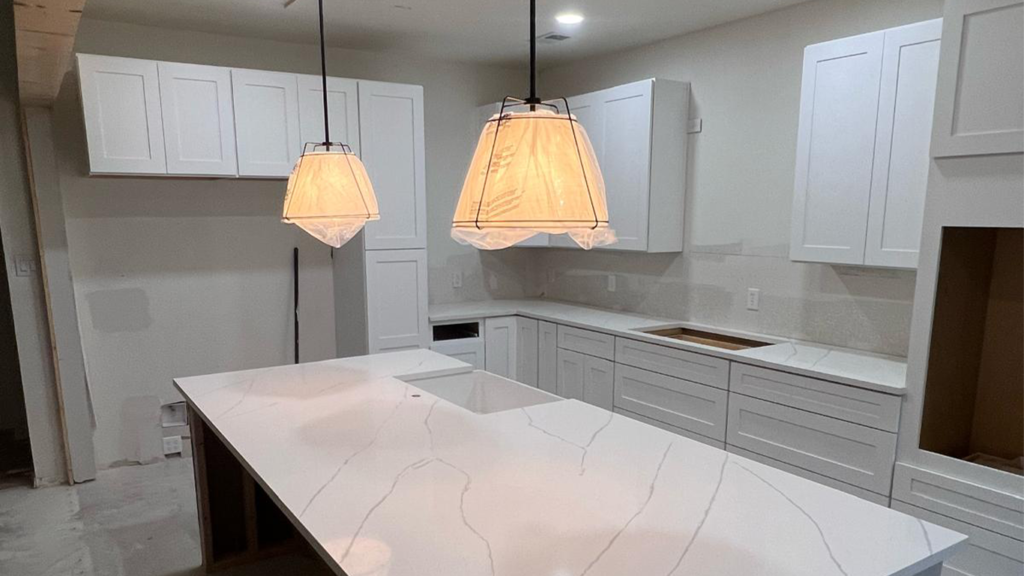
White shaker kitchen cabinets installed in a San Antonio home remodel

Why Your Cabinet Choice Sets the Tone for the Whole Kitchen

Cabinets dominate more wall and visual space in a kitchen than almost any other element. They shape how the room feels, how well it functions, and how it photographs when you eventually decide to sell.

In neighborhoods like Alamo Heights or Boerne, the cabinet decision tends to drive everything else — countertop material, hardware finish, tile backsplash. Getting it right first saves costly revisions later.

Beyond appearance, cabinets determine how your kitchen actually works day to day. Storage configuration, drawer depth, door swing patterns, and interior organization systems all come from cabinet design. A beautiful cabinet that wastes space or fights your cooking habits will frustrate you within a month.

So slow down at the start. Understanding your actual storage needs and cooking habits before you choose door styles leads to a better outcome than picking a finish you love and working backward.

The Three Cabinet Types You’ll Encounter in San Antonio Showrooms

When you start shopping for kitchen cabinets in San Antonio, you’ll encounter three main categories. Each one serves a different need and budget.

Stock Cabinets

Stock cabinets are pre-built in standard sizes and shipped from warehouse inventory. They’re the most affordable option and available quickly — often within days. Modern stock cabinet lines have improved significantly in quality and finish variety.

For homeowners in Leon Valley or Schertz working within a firm budget, stock cabinets from a reputable supplier can deliver solid results. The main limitation is sizing. Unusual kitchen dimensions require filler pieces to close gaps, which affects the finished look. Box construction quality varies considerably between stock lines, so ask what materials are used in the cabinet box itself.

Semi-Custom Cabinets

Semi-custom cabinets give you more flexibility in size, finish, and interior configuration while staying more affordable than fully custom work. Lead times are longer than stock — typically two to six weeks — but the fit is usually better and finish options are broader.

For most San Antonio kitchen remodels, semi-custom hits the right balance of quality, flexibility, and value. You get cabinets that fit your kitchen’s actual dimensions without the full cost and lead time of custom work. The quality difference over stock — particularly in box construction and hinge hardware — is noticeable.

Custom Cabinets

Custom cabinets are built to your exact specifications by a cabinetmaker. No size constraints, full control over every detail. This is the right choice for high-end remodels, unusual kitchen layouts, or homeowners who need a specific wood species or finish not available elsewhere.

The tradeoff is lead time — eight to twelve weeks or more — and cost. Custom is significantly more expensive than stock or semi-custom. For homeowners in Stone Oak or the Hill Country fringe where kitchens are larger and design expectations are higher, the investment often makes sense.

Cabinet Door Styles That Work in Texas Homes

Cabinet style sets the overall design direction for your kitchen. Here are the styles getting the most attention from San Antonio homeowners right now.

Shaker Cabinets

Shaker cabinets are the most consistent sellers in Texas kitchens. The clean five-piece door with a recessed center panel works in farmhouse, transitional, and even modern kitchens depending on color and hardware. If you’re not sure what style fits your home, shaker is a reliable starting point that photographs well and appeals to future buyers.

In white or off-white, shaker cabinets suit farmhouse, transitional, and coastal kitchens without looking forced. In navy or sage green, the same door delivers a more contemporary look. Paired with natural wood accents or open shelving, shaker takes on a warmer, more casual character.

Browse kitchen cabinet options at Cabinet Bazaar, or see our full breakdown of kitchen cabinet styles for San Antonio homes for a side-by-side comparison.

Flat-Front (Slab) Cabinets

Flat-front cabinets are the choice for modern and contemporary kitchens. No ornamentation, clean edges, a seamless look that pairs well with quartz countertops and minimalist hardware. In newer San Antonio developments and urban remodels, slab cabinets are increasingly common.

Making flat-front cabinets work requires consistency across the rest of the kitchen design. They demand clean lines throughout — countertop edge profile, backsplash tile, appliance handles.

Raised Panel Cabinets

Traditional and formal, raised panel cabinets suit older homes or projects where the homeowner wants a classic, furniture-like appearance. More ornate than shaker, they require more detailed cleaning along the panel edges — worth considering for busy households.

In San Antonio’s established neighborhoods like Alamo Heights and Terrell Hills, raised panel cabinets often complement the home’s existing architectural details more naturally than contemporary styles would.

Beadboard Cabinets

A softer cottage or coastal look that works well in breakfast nooks, kitchen islands, or homes with a farmhouse theme. Less common than shaker, but effective in the right setting — particularly in homes near the Texas Hill Country.

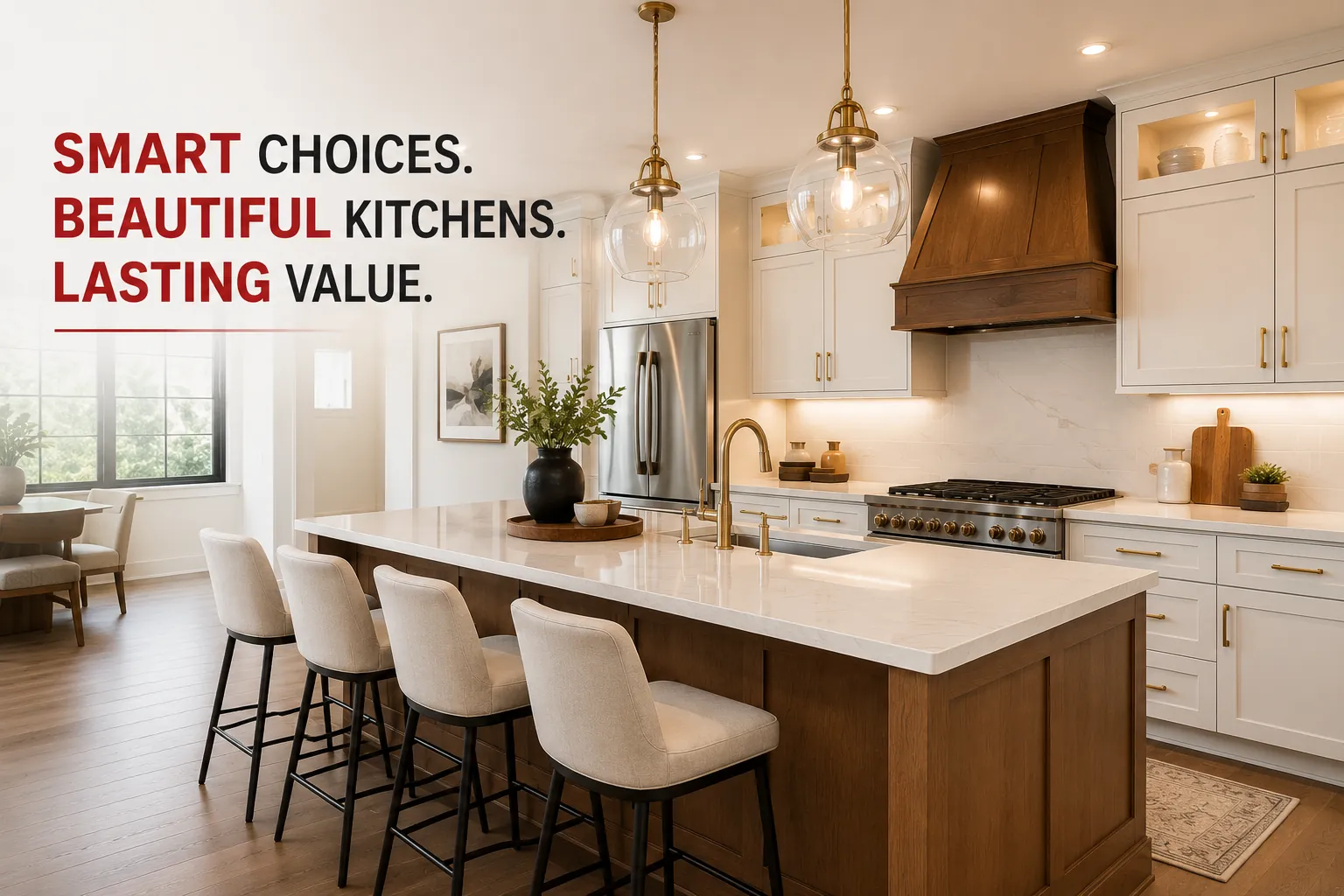
Luxury kitchen remodel with white shaker cabinets, quartz island countertops, and custom cabinetry showcasing smart kitchen design choices in San Antonio
Modern luxury kitchen featuring custom white shaker cabinets, premium quartz countertops, and timeless design elements that add lasting value to Texas homes.

Cabinet Materials That Hold Up in South Texas Heat

San Antonio’s heat and humidity are a real factor when choosing cabinet materials. Here’s what holds up well in this climate.

Plywood Box Construction

The cabinet box — sides, top, bottom, and back — should be plywood rather than particleboard for any kitchen that sees regular use. Plywood is dimensionally stable, resists moisture better, and holds screws more securely. That matters for hinges and drawer slides over time.

In San Antonio’s summer heat, kitchens can experience temperature swings when the AC cycles off. Plywood handles this better than particleboard, which can swell and distort near sink areas or dishwashers.

MDF Door Fronts for Painted Finishes

MDF (medium-density fiberboard) is a good choice for painted cabinet doors because it doesn’t have wood grain that telegraphs through paint. It’s heavier than solid wood but produces a smoother finished surface. Most painted shaker and slab doors use MDF for exactly this reason.

Solid Wood Doors

For stained or natural-finish cabinets, solid wood doors are the standard. Popular species for San Antonio kitchens:

  • Maple: Smooth, tight grain — takes paint and stain well, one of the most common cabinet wood species
  • Alder: Slightly more rustic character with subtle grain variation
  • Oak: Pronounced, visible grain, very durable — less common in current trends but still requested for traditional kitchens

Thermofoil and Laminate

Budget-friendly options that look good in the right applications. Thermofoil can peel in high-heat areas near ovens over time, so placement matters. Laminate has improved significantly in recent years and performs well in lower-humidity environments. For long-term durability in Texas, plywood boxes with solid wood or MDF painted doors remain the standard recommendation.

How to Pair Cabinets with Countertops

The cabinet-to-countertop relationship is one of the most common points of confusion in kitchen design. A few principles that actually help:

White or light cabinets

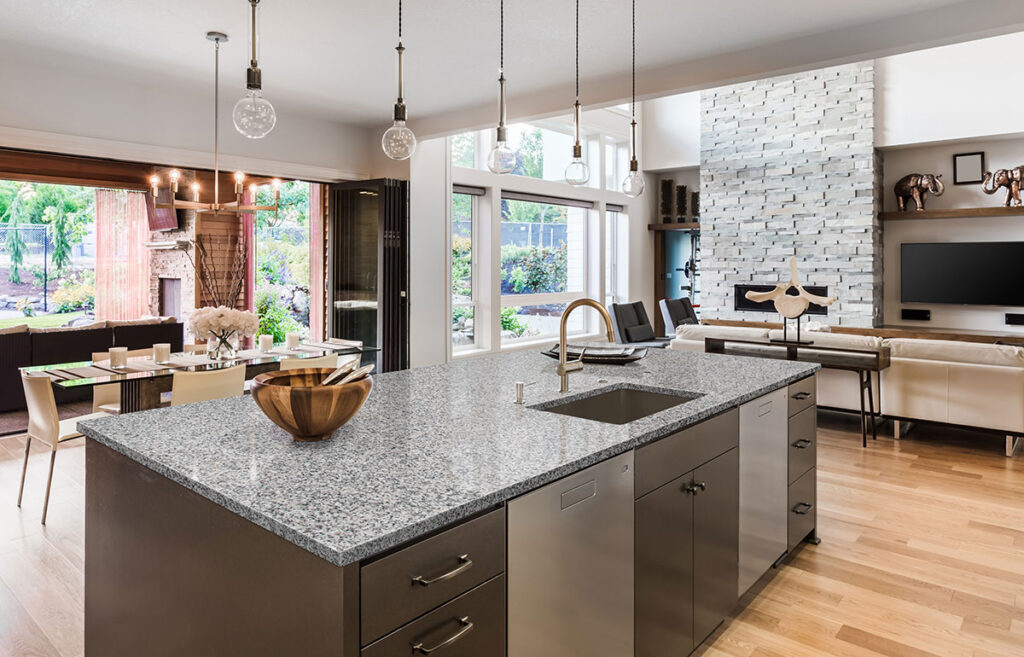
White cabinets remain the most popular finish in San Antonio kitchens. They pair with almost any countertop material: white quartz for a bright, clean look; light gray quartz for contrast without drama; butcher block for warmth; or veined natural stone for an upscale feel.

Dark cabinets

Navy, charcoal, forest green, and black have grown in popularity. With dark cabinets, lighter countertops create the contrast that keeps the kitchen from feeling heavy. White or cream quartz, light marble-look porcelain, and natural quartzite all work well here.

Two-tone kitchens

Pairing light upper cabinets with a contrasting island or lower cabinets in a darker shade adds visual depth and lets you incorporate a trending color without committing to it across the entire kitchen.

For countertop options that complement your cabinet choice, explore Cabinet Bazaar’s countertop solutions. You can also read the full material comparison in our best kitchen countertops in San Antonio guide.

What a San Antonio Kitchen Remodel Actually Costs

Cabinet costs vary widely depending on material, kitchen size, and category. A few practical observations:

Kitchen size is the primary cost driver. Linear footage of cabinet runs determines more of the total project cost than anything else. A galley kitchen with 15 to 20 feet of cabinets will cost substantially less than a U-shaped kitchen with 30-plus feet of runs.

Category affects both price and timeline. Stock projects move quickly and cost less per linear foot. Semi-custom offers better sizing flexibility at a moderate premium. Custom is the right call when layout or design requirements can’t be met otherwise — but cost and lead time are significantly higher.

Installation is a separate cost. Removing existing cabinets, preparing walls and floors, leveling, securing, and finishing all add to the total. Having one team handle both supply and installation simplifies project management considerably.

Before requesting quotes, measure your kitchen carefully. Note ceiling height, window and door locations, and appliance positions that affect placement. Accurate measurements let suppliers give precise quotes and reduce surprises. Contact Cabinet Bazaar for a free consultation — we handle both supply and installation for San Antonio homeowners.

What to Know Before You Order Kitchen Cabinets in San Antonio

Measure twice before you order. Cabinet orders are built or cut to your specifications. Returns and remakes are expensive and slow the project. Get accurate measurements of every wall, window, and appliance before visiting a showroom or starting a quote.

Consider your project timeline from the start. Stock cabinets ship fast. Semi-custom and custom have lead times that matter if you have a hard deadline. Confirm lead times before placing an order.

Visit a showroom when possible. Online photos don’t accurately reproduce finish colors. What looks like a warm white online can read as yellow in your kitchen’s lighting. Here’s what to expect when you visit a kitchen cabinet showroom in San Antonio.

Ask what’s included in the base price. Some cabinet lines include soft-close hinges and drawer slides as standard. Others charge extra. Knowing what’s included lets you compare quotes accurately.

Think about interior storage from the start. Pull-out trays, drawer organizers, lazy Susans, and other internal accessories are easier to spec during a cabinet project than to add later.

Get at least two quotes. Pricing varies between cabinet suppliers in San Antonio. A second quote gives you a baseline and sometimes surfaces options you hadn’t considered.

Frequently Asked Questions

What are the most popular kitchen cabinet colors in San Antonio right now?

White and off-white remain the most consistent sellers across San Antonio. Two-tone kitchens pairing white uppers with a colored island base are increasingly popular. Navy, sage green, and warm charcoal are the most requested accent colors in current remodels.

How long does a kitchen cabinet replacement project take in San Antonio?

It depends on cabinet type. Stock projects can move from order to installation in one to two weeks. Semi-custom orders typically take three to six weeks for delivery, with installation completed in one to three days depending on kitchen size. Custom cabinets can take eight to twelve weeks or longer.

Are RTA (ready-to-assemble) cabinets a good option for San Antonio homeowners?

RTA cabinets can work well for homeowners comfortable with assembly or working with a contractor who handles it. Quality varies significantly by brand. Plywood box construction is preferable to particleboard for long-term durability in Texas kitchens. Read our guide on assembled kitchen cabinets in San Antonio for more detail.

Should I replace or reface my kitchen cabinets?

Refacing — replacing door fronts and drawer faces while keeping the existing boxes — makes sense when boxes are solid but the doors look dated. If boxes show water damage, structural issues, or poor layout, full replacement is the better long-term investment.

What should I look for in a kitchen cabinet store in San Antonio?

Look for a showroom where you can see finishes in person, a team that can help with layout planning, clear lead times and pricing, and installation services. A supplier who handles both product and installation reduces coordination headaches and accountability gaps during the project.

Do kitchen cabinets add value to a San Antonio home?

Kitchen remodels consistently rank among the highest-return home improvement projects. According to Remodeling Magazine’s Cost vs. Value Report, kitchen updates including cabinet replacement return a meaningful percentage of investment at resale. In San Antonio’s active real estate market, an updated kitchen with quality cabinets is a significant selling point.

Ready to Start? Visit Cabinet Bazaar in San Antonio

Choosing kitchen cabinets in San Antonio doesn’t have to be complicated. Start with your budget range and kitchen dimensions, decide between stock, semi-custom, or custom based on your timeline and design goals, and choose a style that fits both your home’s character and your actual cooking habits.

Cabinet Bazaar’s showroom works with Texas homeowners on everything from straightforward stock replacements to full kitchen remodels. Visit the showroom, explore kitchen cabinet collections, or request a free consultation to get your project started today.

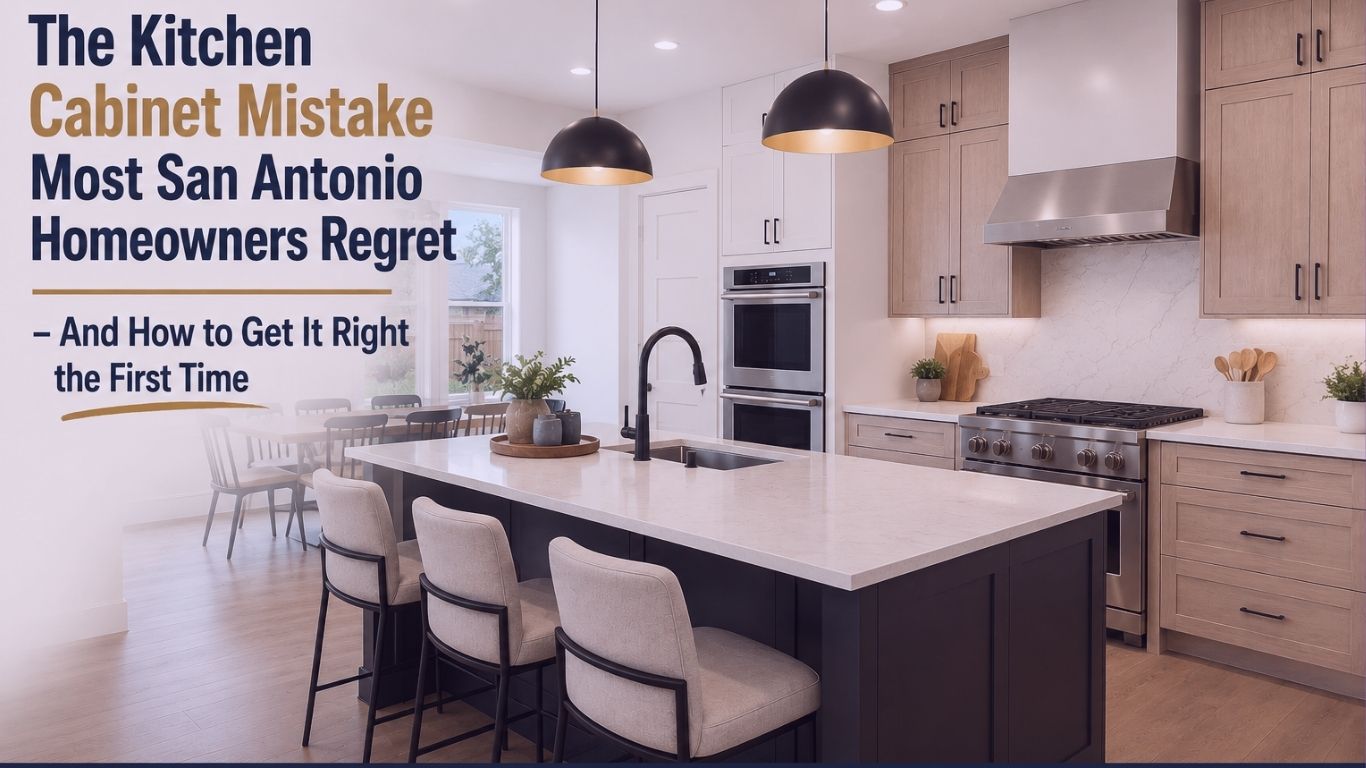
The Kitchen Cabinet Mistake Most San Antonio Homeowners Regret – And How to Get It Right the First Time

Choosing Kitchen Cabinets Is Harder Than It Looks:


Most people spend more time picking a paint color than they do thinking through their cabinet style. That makes sense on the surface: paint is cheap to change, and cabinets look like cabinets. But cabinets are the single most visible element in a kitchen. They set the tone for everything else. Get the style wrong and you’ll feel it every morning when you walk in.


This guide walks through the most common cabinet styles available in San Antonio, how to match them to your home, what they cost, and what questions to ask before you commit. If you’ve been putting off a kitchen refresh because the options feel overwhelming, this should help narrow things down.


Why Cabinet Style Matters More Than You Think


Here’s something most remodeling guides skip over: Cabinet doors are the first thing your eye lands on when you enter a kitchen. Not the countertops, not the backsplash. The cabinets. That means the style, finish, and color you choose will define how every other element reads in the room.


A white shaker cabinet makes a quartz countertop look clean and modern. That same quartz next to a dark wood European flat-front cabinet reads differently. It’s not that one is wrong. It’s that they tell different stories, and only one of those stories fits your home.


The National Kitchen and Bath Association consistently reports that kitchen remodels are among the top three home improvement projects that affect resale value. Getting your cabinet style right is not just about aesthetics: it’s a financial decision.


The Most Popular Cabinet Styles in San Antonio Kitchens Right Now:

Shaker Cabinets: The One That Works in Almost Any Kitchen

Shaker cabinets have been the dominant style in American kitchens for over a decade, and there’s a straightforward reason for that. The recessed center panel creates just enough visual detail without committing to a particular era or aesthetic. They work in farmhouse kitchens, transitional spaces, and even contemporary layouts, depending on the hardware you pair with them.


Cabinet Bazaar carries several shaker variations:


  • Shaker White is the most requested finish. It makes small kitchens feel larger and pairs cleanly with quartz countertops in white or light gray.
  • Shaker Gray has become a strong alternative for homeowners who want the versatility of shaker without the starkness of white. It reads as neutral without feeling cold.
  • Shaker Navy Blue is the choice for lower cabinets or kitchen islands where you want a color accent. It tends to pair well with brass or matte black hardware.
  • Shaker Cinder is a deeper charcoal option for kitchens that lean toward a moody, dramatic palette.
  • Shaker Wood brings in natural grain texture for a warmer feel without going full traditional.


If you’re not sure where to start, a shaker is usually the right default. You can see how these compare in the Cabinet Bazaar gallery before making a decision.

For more on what gray Shaker cabinets look like in San Antonio homes specifically, the Cabinet Bazaar blog post on gray shaker cabinets covers shade comparisons and cost in detail.

European Dark Wood: For Kitchens That Want to Make a Statement:


The European Dark Wood style is a flat-front cabinet with a rich, dark finish. No center panel, no decorative detail. The look is clean and intentional. It’s suited to kitchens that have strong architectural elements to work with: large windows, concrete or stone floors, and open-plan layouts.


This style tends to divide opinions. Some homeowners find it too dramatic. Others find everything else looks dated next to it. The honest answer is that it depends on what the rest of your space is doing. If your home leans contemporary, a European flat-front is worth considering seriously. If your home has traditional trim and detailed millwork, it may clash more than complement.


According to research published by Houzz, dark and two-tone kitchen designs have been gaining ground in recent years, with homeowners increasingly willing to use deep tones on lower cabinets while keeping upper cabinets light. That’s a direction the European Dark Wood style supports well.

Franklin Series: A Step Between Traditional and Transitional:


The Franklin collection sits between a traditional raised-panel look and the cleaner shaker profile. It’s a good fit for homes that have more detail in the moldings and architecture but where the owner doesn’t want to go fully ornate.


  • Franklin White is the lighter option and tends to photograph well in kitchen listings.
  • Franklin Gray brings a bit more warmth and works particularly well in kitchens with warmer-toned countertops.

Bristol Beige: When Warm Neutrals Are the Right Move

The Bristol Beige style tends to get overlooked in favor of white or gray. That’s a mistake for certain kitchens. If your home gets a lot of natural light, or if you’re pairing cabinets with a butcher block or wood-toned countertop, a warm beige reads better than a cool white. It also ages more gracefully in high-traffic kitchens where fingerprints are a daily reality.


Slim Green: For the Kitchen That Doesn’t Want to Blend In

The Slim Green option is more specific in its application. Greens have been a rising trend in kitchen design, and a saturated green cabinet done well looks intentional and current. It pairs well with brass hardware and light natural stone countertops. It’s not for every kitchen, but for the ones where it works, it tends to be the best version of that kitchen.


Matching Cabinet Style to Your Home’s Architecture:


San Antonio homes span a wide range of styles: 1970s ranch houses, newer suburban builds, Craftsman bungalows, Spanish colonial revival, and modern new construction in the Hill Country edge of the metro. The cabinet style that works in one won’t necessarily work in another.


A few general principles:


Ranch and suburban homes tend to do well with shaker styles. They’re flexible enough to work in either direction and won’t look out of place with standard ceiling heights and neutral finishes.


Craftsman and traditional homes lean toward the Franklin collection or a wood-toned shaker option. The detailed millwork in those homes wants something with a bit more visual weight than a flat-front cabinet.


Contemporary or new construction is where European flat-front and Slim collections have room to work. Clean lines, flat surfaces, and minimal hardware fit the aesthetic of those spaces.


Older homes with limited natural light often benefit from lighter finishes: Shaker White, Franklin White, or Bristol Beige. Dark cabinets can make a low-light kitchen feel smaller than it is.


The Cabinet Bazaar design service includes a 3D rendering so you can see how a specific style will look in your space before you commit. That service alone saves most homeowners from at least one expensive mistake.


What About Countertops?

Cabinets and countertops have to work together. Cabinet Bazaar carries both, which makes the pairing process easier. You can see the full countertop options alongside the cabinet styles you’re considering.


Some general pairing notes:


  • White quartz with white shaker cabinets reads clean but can feel flat without texture somewhere else in the room. A wood-toned open shelf or a darker island helps.
  • Granite with warm undertones tends to pair well with Bristol Beige or Franklin Gray rather than cool white cabinets.
  • Dark countertops work well with light cabinets and vice versa. The contrast tends to define the space rather than letting it blur together.


According to Consumer Reports, quartz has become the most popular countertop material in kitchen remodels, outpacing granite in most regional markets. It requires less sealing and holds up well to daily use in high-traffic kitchens. That tracks with what most San Antonio homeowners are choosing right now.


For a more detailed breakdown of countertop options, the Cabinet Bazaar guide to the best kitchen countertops in San Antonio covers material differences, durability, and pricing.


The Cost Conversation: What to Expect:

Cabinet pricing can feel opaque if you haven’t gone through a remodel before. Here’s how to think about it.


The industry uses a 10×10 kitchen as a standard baseline. It’s a hypothetical layout: two walls of cabinets, 10 feet each. Cabinet Bazaar’s 10×10 package starts at around $1,750. That gives you a baseline for comparison across suppliers.


Your actual kitchen will cost more or less, depending on the following:


  • Total linear footage of cabinets. Most kitchens are larger than 10×10.
  • Upper vs. lower cabinets and their configurations. Tall pantry cabinets, pull-out shelves, and corner solutions all affect cost.
  • Finish and hardware upgrades. Some finishes carry a premium over base pricing.
  • Add-on services. Assembly, delivery within Texas, and installation are separate line items. These are worth budgeting for upfront rather than treating as optional.


The Remodeling Cost vs. Value report published annually by Remodeling Magazine consistently shows that a mid-range kitchen remodel recoups a significant portion of its cost at resale. The numbers vary by region and market conditions, but the investment tends to hold better than most other remodel categories.


If you want a number specific to your kitchen, bring your measurements to cabinetbazaar.com/calendar and book a visit. You’ll leave with an actual quote rather than a guess.


What to Do Before You Visit the Showroom

A lot of people walk into a cabinet showroom with no information and leave overwhelmed. Here’s a short list of what helps.


Measure your kitchen. Even rough measurements give the design team enough to work with. Wall widths, ceiling height, and the location of windows, doors, and appliances are the key data points. Bring photos if you have them.


Know your deal-breakers. Do you need a specific amount of drawer storage? Do you have a corner that’s been poorly used for years? Are there appliances you plan to keep that have specific clearance requirements? Knowing your non-negotiables helps narrow the options faster.


Have a rough budget range in mind. You don’t need a precise number. Knowing whether you’re working with $5,000 or $25,000 or somewhere in between shapes which configurations make sense to explore.


Look at the gallery first. The Cabinet Bazaar gallery gives you a sense of finished kitchens. That’s more useful than looking at individual cabinet door samples because it shows how a style reads in context.

The Cabinet Bazaar blog post on what to expect from a kitchen cabinet showroom visit is worth reading before you go. It covers what questions to ask and what to watch out for.

For Contractors: The Cabinet Bazaar Program:

If you’re a contractor doing kitchen and bathroom remodels across the San Antonio area, Cabinet Bazaar has a dedicated contractor program with pricing and service benefits structured around high-volume work. Details and applications are at cabinetbazaar.com/calendar. The delivery service covering all of Texas makes it practical for contractors working across a wider radius.


Choosing kitchen cabinets comes down to four things: your home’s architecture, how the style pairs with your countertop, what you can comfortably spend, and what you’ll be happy looking at five years from now.


Cabinet Bazaar carries enough styles to serve most design directions, and they have in-person design help to make the decision easier. The 3D design service, the in-house countertop selection, and the full suite of delivery, assembly, and installation services mean you’re not piecing together a project from multiple vendors.


The showroom is at 5601 Bandera Rd, Suite 100, San Antonio, TX 78238. You can book a visit at cabinetbazaar.com/calendar or start with the online design tool at cabinetbazaar.com/home-cabinet-model if you want to get a feel for the layout before you go in.

FAQs:

Q1: What cabinet styles does Cabinet Bazaar carry? 


Cabinet Bazaar carries a wide selection of kitchen cabinet styles, including Shaker White, Shaker Gray, Shaker Navy Blue, Shaker Cinder, Shaker Wood, Franklin White, Franklin Gray, Bristol Beige, European Dark Wood, and Slim Green. Each style comes in different finishes and configurations to fit a range of kitchen layouts and design preferences. You can browse the full collection at cabinetbazaar.com/cabinet-bazaar-category.


Q2: Does Cabinet Bazaar offer design help? 


Yes. Cabinet Bazaar provides a professional 3D kitchen and bathroom design service. You can bring your measurements and photos to the showroom, and their team will help you build a layout and get a quote. You can also start the process online at cabinetbazaar.com/services_management/design-service. There’s no need to have everything figured out before you walk in.


Q3: How much do kitchen cabinets cost at Cabinet Bazaar? 


Cabinet Bazaar uses the industry-standard 10×10 kitchen layout as a pricing baseline. Their 10×10 package starts at approximately $1,750. Final pricing depends on your specific kitchen layout, the number of cabinets, and any upgrades you choose. You can use the online kitchen design tool at cabinetbazaar.com/home-cabinet-model to get a clearer picture before visiting.


Q4: Does Cabinet Bazaar handle delivery and installation? 


Yes to both. Cabinet Bazaar delivers anywhere within Texas and offers a professional installation service so your cabinets go in correctly the first time. They also have an assembly service for customers who prefer their cabinets pre-assembled before delivery. Details are at cabinetbazaar.com/services_management/installation-service.


Q5: Can I visit the Cabinet Bazaar showroom before buying? 

Absolutely. The showroom is located at 5601 Bandera Rd, Suite 100, San Antonio, TX 78238. You can walk in during business hours (Monday through Friday, 8 AM to 6 PM; Saturday, 10 AM to 3 PM) or book a dedicated appointment at cabinetbazaar.com/calendar. Seeing cabinet styles in person makes a bigger difference than most people expect.


Kitchen Cabinet Showroom in San Antonio: What to Expect, What to Check, and How to Make the Most of Your Visit

There is a version of this process that goes badly. You order kitchen cabinets online based on photographs, the product arrives and the color is nothing like what you expected, the box construction feels lightweight, and the drawer action is not what you imagined it would be. By that point, returning a full kitchen’s worth of cabinets is expensive, time-consuming, and stressful.

Then there is the version where you drive to a showroom, spend an hour opening doors, checking drawer quality, comparing finishes under real lighting, and walking out with a clear plan that you are confident in. That version exists too, and it is available to every San Antonio homeowner considering a kitchen or bathroom renovation.

We at Cabinet Bazaar operate a kitchen cabinet showroom in San Antonio for exactly this reason. This guide covers what to expect when you visit a cabinet showroom, what to check before placing any order, and how to make the most of your time when you come in. For a broader guide on kitchen cabinet styles, costs, and categories in San Antonio, our kitchen cabinets San Antonio’s detailed guide covers the full picture.


1. Why Visiting a Cabinet Showroom Changes the Decision

The Photograph Problem

Cabinet manufacturers and retailers put significant effort into product photography, which means their images show cabinets under controlled studio lighting, often staged with ideal countertops and hardware. What you see on a screen is the best-case version of the product under optimal conditions.

A white that looks warm and creamy in a product photograph can read as cool and clinical under the LED strip lighting above your kitchen countertop. A navy blue that looks rich and deep in a studio shot can read as flat in a north-facing kitchen with limited natural light. Gray is the most prone to this problem among cabinet colors because its undertone shifts most dramatically between lighting conditions.

These shifts are not visible in photographs, no matter how good the photography is. Seeing the actual product in a showroom under realistic lighting removes this variable entirely.

The Feel Problem

There are things about cabinet quality that simply cannot be communicated in a product listing. The weight and resistance of a door when you swing it open. The quality of the soft close mechanism as it decelerates the drawer in the final inch. The solidity of the cabinet box when you press gently on the side panel. Whether the door closes flush or has a slight wobble.

Every one of these things is immediately obvious when you are standing in front of the actual product. None of them is visible on a product page.

According to Houzz’s kitchen renovation research, homeowners who visited a showroom before purchasing kitchen cabinets reported higher satisfaction with their renovation outcome than those who ordered without seeing the product in person. That finding is consistent with what we hear from our own customers.


2. What to Check When You Visit a Kitchen Cabinet Showroom in San Antonio

Not every showroom visit produces useful information if you do not know what to look for. Here are the five things worth checking at any cabinet showroom, including ours.

1. The Cabinet Box Construction

Open a base cabinet and look at the side panel edges. Plywood shows a cross-grain pattern at the edges, where layers of wood alternate direction. MDF, which is medium-density fiberboard, shows a uniform, smooth gray-brown edge with no grain pattern.

Plywood boxes are more durable, hold screws better over time, and resist moisture near sinks and dishwashers more reliably than MDF. If the cabinet box is MDF, that is useful information to weigh against the price.

2. The Drawer Box Joints

Pull open a drawer and look at the corners of the drawer box itself. Dovetail joinery shows as interlocking wedge-shaped pieces at each corner. Stapled or dowel-joined drawer boxes use much simpler connections that wear faster under the racking force of daily use.

This detail takes about five seconds to check and tells you a great deal about the manufacturer’s overall construction philosophy.

3. The Soft Close Mechanism

Push a door or drawer to within an inch of closing and release it. A quality soft close mechanism decelerates the door or drawer smoothly and closes it completely without any assist from you. A poor one decelerates unevenly or requires a gentle push to close fully. Cheap soft-close hardware that works adequately in a showroom often degrades faster in daily use.

4. The Finish Under Different Lighting

Move the cabinet door sample toward a window if one is available. Then look at it under the overhead artificial lighting. Note whether the color and undertone shift between the two. If you are considering a white cabinet, this check is especially important, since warm whites and cool whites can look nearly identical under some lighting conditions and very different under others.

5. The Door Alignment and Overlay

Look at how the doors sit on the cabinet frame. A full overlay door covers the full face of the box with a small, consistent reveal between adjacent doors. Uneven reveals, doors that sit at slightly different heights, or doors that have play when pushed sideways indicate either a quality issue or a display cabinet that has not been maintained.


3. What to Bring to Your Showroom Visit

A showroom visit is more productive when you arrive with a few things prepared. You do not need everything on this list, but having even half of it makes the conversation with the design team significantly more useful.

  • Your kitchen measurements. Width and height of each wall that will have cabinets. Ceiling height. Window and door locations. Distance between appliances. If you have an island, its dimensions. Rough measurements are fine. We can refine them during the design consultation.
  • A photograph of your current kitchen. Even a quick phone photo helps the design team understand what the renovation is replacing and what the goals are.
  • Your countertop sample or reference material. If you have already chosen a countertop, bring a sample or a clear photograph. Comparing it against cabinet finishes in person is the most reliable way to confirm the pairing works.
  • A realistic budget range. Not a fixed number you are committed to, just a range. Knowing whether you are working with $12,000, $20,000, or $35,000 helps the design team direct you toward the right product tier and configuration from the start.
  • Any inspiration photographs you have collected. If there is a kitchen you have seen online or in a magazine that represents the direction you want to go, bring it. It is much faster to start from a reference than from a verbal description.


4. Questions to Ask at Any Cabinet Showroom in San Antonio

Most buyers forget to ask some of these. They matter.

Is this finish in stock or a custom order?

Standard stock colors ship faster. Custom or non-standard colors require a production run that adds weeks to the lead time. If your renovation has a defined contractor schedule, knowing this before you order matters.

What is the box construction material?

Ask specifically whether the cabinet box is plywood or MDF. A supplier who cannot answer this question clearly is a signal worth noting.

What warranty covers the cabinet and hardware?

Quality assembled cabinets typically carry a one to five year warranty on construction defects. Ask what the warranty covers specifically and how claims are handled.

Does installation include adjustment after countertops go in?

Cabinet doors sometimes need minor adjustment after countertops and appliances are installed. Knowing whether this is part of your installation quote prevents a misunderstanding later.

What is included in the installation quote?

Base cabinets, wall cabinets, the island, crown molding, and filler strips are not always included in a single installation quote. Get clarity on what is and is not covered before you accept a price.


5. Cabinet Showroom vs. Big Box Store: The Real Difference

Home improvement chains carry cabinets. They stock a range of options at competitive prices and the product is available for quick pickup or delivery. For buyers who know exactly what they want, have already made their decisions, and are managing a straightforward installation, this can work fine.

Where dedicated cabinet showrooms differ is in the design expertise and product depth. A dedicated showroom carries a broader range of styles and finishes, displays the product in full kitchen configurations so you can see how door pairings and countertop combinations look together, and provides design consultation that goes beyond pointing you to an aisle.

According to The Family Handyman’s guide to cabinet shopping, buyers who work with a cabinet specialist rather than purchasing through a general retailer tend to avoid the most common cabinet sizing and configuration mistakes that lead to costly corrections after installation.

We at Cabinet Bazaar are a dedicated cabinet showroom, not a general home improvement store. Our entire operation is cabinets, countertops, and the design expertise to help you choose and plan the right ones for your specific kitchen or bathroom.


6. What Happens During a Free Design Consultation at Cabinet Bazaar

Our free 3D kitchen design consultation is a working session, not a sales presentation. Here is what it covers.

We start with your measurements and your kitchen photographs. From there, our design team builds a cabinet layout that fits your specific space, addresses the storage and configuration requirements you describe, and stays within the budget range you provide. We produce a 3D visualization of the finished kitchen so you can see what the selected style looks like in your actual dimensions before anything is ordered.

We will point out things that often get overlooked: where filler strips will be required and how to minimize them, whether your ceiling height allows for crown molding, whether your current appliance positions work with the new cabinet layout or create problems, and what the installation sequence should look like to minimize disruption.

The consultation costs nothing. We run it because buyers who see a clear plan before ordering make better decisions and end up with kitchens they are genuinely satisfied with. Book your free consultation here.


7. Cabinet Styles Available to See in Our San Antonio Showroom

Our showroom carries display cabinets across all of our main collections. You can see and compare the following styles in person:


If you are comparing assembled kitchen cabinets against RTA options, our showroom carries both and our team can walk you through the construction differences in person.


8. Visit Us: Cabinet Bazaar San Antonio Showroom

Address: 5601 Bandera Rd, Suite 100, San Antonio, TX 78238

Phone: 1 (210) 773 2799

Email: info@cabinetbazaar.com

Book a free design consultation: cabinetbazaar.com/calendar 


Walk-ins are welcome during business hours. If you want dedicated one-on-one time with a designer rather than working around other customers, booking a time through our calendar ensures you get that.

We serve homeowners and contractors across the San Antonio region, including Stone Oak, Castle Hills, Fair Oaks Ranch, Shavano Park, Live Oak, Hollywood Park, Bulverde, and Cibolo.


FAQs:


Q1. Where is the Cabinet Bazaar kitchen cabinet showroom in San Antonio?

Our San Antonio showroom is at 5601 Bandera Rd, Suite 100, San Antonio, TX 78238. Walk-ins are welcome during business hours. For a dedicated design session where you get uninterrupted time with one of our designers, you can book a free 3D kitchen design consultation through cabinetbazaar.com/calendar before you visit. Call us at 1 (210) 773 2799 or email info@cabinetbazaar.com if you want to confirm hours or check stock availability before making the trip.

Q2. What can I see in person at the Cabinet Bazaar showroom?

Our showroom carries display cabinets across our full range of styles, including Shaker White, Franklin White, Shaker Navy Blue, Shaker Gray, Shaker Cinder, Shaker Espresso, European Dark Wood, Bristol Cream, and Bristol Beige, among others. You can open and close every display door and drawer, check the soft-close hardware quality, view the finishes under real lighting, and compare multiple styles side by side. We also carry countertop samples so you can make cabinet and countertop pairing comparisons in person during your visit.

Q3. Do I need an appointment to visit the Cabinet Bazaar showroom in San Antonio?

No, walk-ins are welcome during business hours, and you do not need an appointment to browse our showroom. That said, if you want a dedicated design consultation where our team works through your full kitchen layout, measurements, and style preferences with you, booking a time in advance through cabinetbazaar.com/calendar ensures you have focused one-on-one time with a designer rather than working around other customers in the showroom. The consultation is free, and there is no obligation to purchase.

Q4. How long does a free design consultation at Cabinet Bazaar take?

A standard free design consultation at our San Antonio showroom typically runs 45 minutes to one hour, depending on the scope of your project and how many questions come up during the session. In that time, our design team will work through your kitchen measurements, discuss the style and finish options that suit your space and budget, and produce a 3D layout of the recommended cabinet configuration so you can see what the finished kitchen would look like before committing to any purchase decision.

Q5. Can I bring my countertop sample to the Cabinet Bazaar showroom?

Yes, and we strongly recommend it. Bringing a countertop sample or a clear photograph of your chosen countertop material to the showroom allows our design team to compare it directly against cabinet door finishes under real lighting conditions. This one step eliminates the most common source of renovation regret we hear from buyers, which is ordering a cabinet color that looked compatible with their countertop in photographs but did not work in the actual kitchen. Our team can also suggest countertop options from our inventory if you have not yet made that choice.

Q6. What is the difference between visiting a dedicated cabinet showroom and buying from a big box store?

A dedicated cabinet showroom carries a deeper range of styles and finishes, displays products in full kitchen configurations so you can see how combinations look together, and provides design expertise focused specifically on cabinetry rather than general home improvement. Our team at Cabinet Bazaar works exclusively with kitchen and bathroom cabinets, which means the design consultation you receive is more specific and more detailed than what a general home improvement retailer can provide. For buyers with a standard straightforward project, both options can work. For buyers with specific style goals, unusual kitchen dimensions, or questions about what will perform best over time, a dedicated showroom visit produces meaningfully better outcomes.

Q7. Does Cabinet Bazaar offer a contractor program for trade professionals in San Antonio?

Yes, we at Cabinet Bazaar offer a structured contractor program for remodelers, designers, and builders working on client projects in the San Antonio area and surrounding region. The program includes trade pricing, priority scheduling, and delivery coordination terms designed around project volume rather than single-order timing. If you are a trade professional looking for a reliable San Antonio cabinet supplier for ongoing project work, contact us through cabinetbazaar.com/contact or call 1 (210) 773 2799 to discuss the program details and how they apply to your business.


Gray Shaker Cabinets San Antonio: Which Shade Works, What They Cost, and How to Get It Right

Gray has had a long run at the top of kitchen design trends, and it earned that position for a reason. It sits comfortably between white’s brightness and wood’s warmth, goes with almost every countertop material, and reads as clean without being cold, if you choose the right shade.

The shade part is where most people get tripped up. Gray is not one color. There is warm gray, cool gray, light silver, deep charcoal, and a dozen shades in between. Get the wrong one for your kitchen’s lighting or your countertop’s undertone, and the whole room can feel flat or washed out.

This guide covers everything San Antonio homeowners need to know about gray shaker cabinets: which shades work in which spaces, how they pair with countertops and hardware, what they realistically cost, and where to see them in person before you commit to an order. For the full overview of kitchen cabinet styles and costs in San Antonio, the kitchen cabinets San Antonio guide on our website covers every category.

1. Why Gray Shaker Cabinets Still Make Sense in 2026

Trends in kitchen design move fast. Sage green had a moment. Warm terracotta had a moment. Both of them also dated faster than the renovation cycles most homeowners are working with.

Gray shaker cabinets have stayed relevant because Gray is genuinely versatile rather than trendy. A mid-tone Gray shaker cabinet works in a kitchen installed in 2019 and still looks intentional in 2026. It pairs with warm-veined quartz, cool concrete-look countertops, butcher block, and marble without requiring a coordinated update every few years.

The shaker door profile helps too. The five-piece door with its flat center panel and clean frame has been the top-selling cabinet door style in the US for years. Put it in gray and you get a combination that is hard to date.

That said, gray is not for every kitchen. It needs some help from lighting and countertop choices. Get both right and gray shaker cabinets look sharp for a long time. Get them wrong and the kitchen feels unfinished. We’ll get into both scenarios.

2. Light Gray vs. Dark Gray: Which Works Where

Light Gray Shaker Cabinets

Light gray sits close to white on the spectrum but carries more character. It does not show smudges and fingerprints the way bright white does, reads as a little warmer or cooler depending on the specific undertone, and gives a kitchen more definition than white while keeping the space feeling open.

Our Shaker Gray is a clean mid-light gray that holds up well under both warm and cool lighting. It pairs particularly well with white quartz countertops with warm veining, warm wood flooring, and brushed nickel or matte black hardware.

Light gray works in almost any sized San Antonio kitchen. In smaller kitchens, it keeps the space feeling open while adding more visual interest than white would. In larger kitchens, it provides a base tone that lets bolder elements like a statement island color or an interesting tile backsplash do the design work.

Dark Gray Shaker Cabinets

Dark gray sits in interesting territory. Deep enough to make a statement, not so bold that it limits your future flexibility. Our Shaker Cinder is a rich charcoal that reads sophisticated without being as bold as navy blue.

Dark gray works best in San Antonio kitchens with strong natural light or a well-planned artificial lighting scheme. Without adequate light, dark gray base cabinets can make a kitchen feel underground. With good light, they create a grounded, considered look that feels genuinely premium.

If you have an open-plan kitchen in a San Antonio home where the kitchen connects to a living or dining space, dark gray base cabinets with light upper cabinets is one of the most effective two-tone combinations available. The dark base grounds the kitchen within the larger open space. The light uppers keep the room feeling proportional.

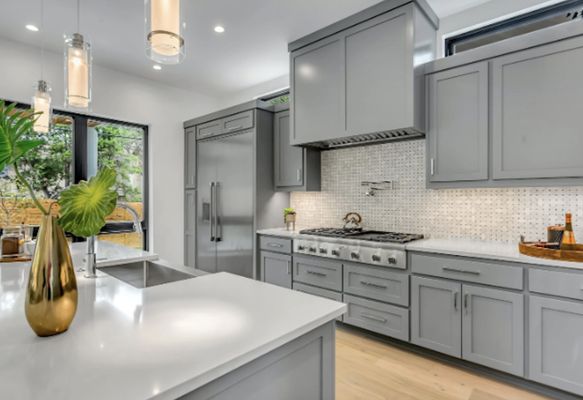
gray shaker cabinets San Antonio

The Undertone Problem Most Buyers Miss

Every gray has an undertone, and it will show up in your finished kitchen whether you planned for it or not. Gray with a blue undertone looks clean and modern but can feel cold in a kitchen with warm-toned wood flooring. Gray with a green undertone pairs beautifully with certain stone countertops and looks off with others.

This is the single strongest argument for seeing gray shaker cabinet samples in person before ordering. A gray that looks perfect on a screen can read entirely differently under the warm LED lighting above your countertop. We keep display cabinets in our San Antonio showroom specifically so buyers can make this comparison before committing.


3. Gray Kitchen Cabinet Ideas That Work in Real San Antonio Homes

Gray Base Cabinets With White Uppers

This is the most popular gray cabinet configuration we see in San Antonio renovations right now, and for good reason. The gray base anchors the kitchen and adds visual weight at counter level. The white uppers keep the upper half of the kitchen light and open. The two-tone contrast creates a kitchen that has more design interest than an all-white kitchen without taking on the risk of a fully bold color choice.

The key to making this work is proportion. If your upper cabinets reach to the ceiling, the white should dominate the overall look. If you have a low ceiling, consider going all gray rather than two-tone, because the contrast can chop the room vertically in a way that makes it feel smaller.

Gray Cabinets With a Contrasting Island

A gray perimeter paired with a navy blue, deep green, or natural wood island is one of the cleaner ways to add a focal point to a San Antonio kitchen without overcommitting to a bold color scheme. The gray reads as a neutral that lets the island stand out. The island becomes the conversation piece. The overall kitchen stays coherent.

Our Shaker Navy Blue pairs particularly well with a gray shaker perimeter. If you have a kitchen island large enough to justify a different color, this is worth considering.

All-Gray Kitchens: When to Commit Fully

An all-gray kitchen in two different shades, light gray uppers and dark gray lowers, works beautifully in kitchens with strong natural light and a lighter countertop material. The tonal contrast between the two gray shades prevents the monochromatic look from feeling flat.

If you are considering an all-gray kitchen, bring countertop samples to our showroom. The countertop material has more influence on whether an all-gray scheme succeeds than almost any other element in the room.


4. What Countertops and Hardware Pair Best With Gray Shaker Cabinets

Countertop Choices for Light Gray Cabinets

White quartz with soft gray or warm veining is the most reliable pairing for light gray shaker cabinets. The contrast is strong enough to read clearly without being harsh. Warm cream natural stone, particularly quartzite, pairs beautifully with light gray cabinets that have a warm undertone. Avoid a stark cool-white countertop with light gray cabinets unless you specifically want the kitchen to feel clinical and clean.

Countertop Choices for Dark Gray Cabinets

Light countertops make the most sense with dark gray cabinets because they create the contrast that keeps the kitchen from feeling heavy. White quartz, light gray concrete-look porcelain, and warm cream stone all work. The countertop lightens the visual load of the dark cabinet color.

According to This Old House’s kitchen countertop guide, the relationship between cabinet color and countertop tone is one of the most important decisions in a kitchen renovation, and getting that pairing right in person rather than from photographs makes a measurable difference in the final result.

Hardware for Gray Shaker Cabinets

Matte black hardware gives gray shaker cabinets a sharp, modern look and provides clean contrast against both light and dark gray. Brushed gold adds warmth to a cool gray cabinet and is the most popular hardware choice in our San Antonio showroom for gray kitchens. Brushed nickel is the safe, understated option that works with any gray but does not do much to elevate the design. Polished chrome can look dated against gray cabinets unless the rest of the kitchen follows a very specific contemporary direction.

5. Gray Shaker Cabinets for the Bathroom

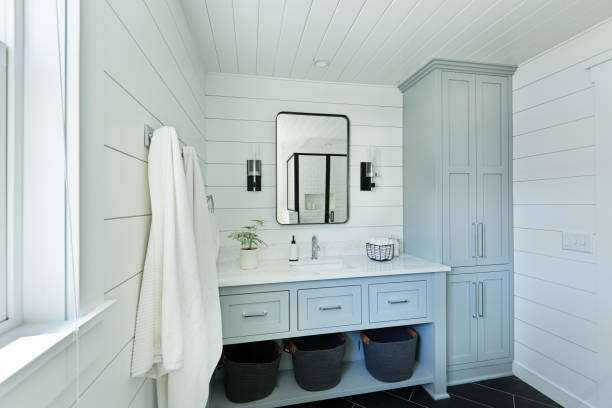
Gray shaker cabinets translate well to the bathroom. Our Shaker Gray and Franklin Gray are both available as bathroom vanity configurations and are particularly popular in master bathrooms where the design language of the space is more considered than a standard guest bathroom.

For a master bath vanity, a gray shaker base paired with a white quartz countertop and brushed gold hardware is a combination that has proven itself in San Antonio homes across price points. It reads as finished and intentional without requiring an elaborate tile scheme or expensive fixture choices to hold it together.

For bathroom vanity sizing, space planning, and configuration options, our Bathroom Cabinets Guide covers the decisions specific to San Antonio bathrooms in detail.


6. How Much Do Gray Shaker Cabinets Cost in San Antonio?

Stock Gray Shaker Cabinets

Stock gray shaker cabinets for a full San Antonio kitchen typically run from $3,500 to $8,500 for the cabinet units alone. This range covers a standard kitchen layout. Island configurations, pantry towers, and corner cabinet solutions will push the cost toward the higher end of the range or beyond it.

Semi-Custom Gray Assembled Cabinets

Semi-custom assembled gray shaker cabinets in San Antonio generally fall between $8,000 and $16,000 for a full kitchen depending on layout size, the specific finish, and interior configuration options. This is the tier where the construction quality difference over stock becomes clearly visible, plywood boxes, dovetail drawers, soft close hardware across every door and drawer.

Total Project Budget

A complete kitchen renovation with gray shaker assembled cabinets, quartz countertops, hardware, and professional installation in San Antonio realistically starts at $14,000 to $18,000 for a standard kitchen. Mid-range projects in larger San Antonio homes typically run $22,000 to $35,000 all-in. Having a realistic total budget before your first showroom visit helps our design team recommend the right product tier without wasting your time.

For a full breakdown of kitchen cabinet costs across all categories in San Antonio, see our kitchen cabinets San Antonio cost guide.

Kitchen Cabinet Financing

If financing makes the full project more manageable, we at Cabinet Bazaar offer financing options for San Antonio buyers. A complete renovation financed over 36 months sits in a range that most households find workable, and getting the full project done in one round consistently produces a better result than phasing it across two or three separate renovation cycles. Contact us at info@cabinetbazaar.com or visit our showroom to discuss what is currently available.


7. Why We at Cabinet Bazaar Are San Antonio’s Source for Gray Shaker Cabinets

We carry gray shaker cabinets in our San Antonio showroom in multiple shades so you can compare them in person under real lighting before making any decision. Our Shaker Gray, Shaker Cinder, and Franklin Gray are all on display alongside our full range of kitchen and bathroom cabinet finishes.

Every assembled gray shaker cabinet we sell is built to the same standard: plywood box construction, dovetail drawer joints, soft close hardware, and full overlay doors. These are not tier-specific features. They are the baseline.

Visit us at 5601 Bandera Rd, Suite 100, San Antonio, TX 78238. Call 1 (210) 773 2799. Email info@cabinetbazaar.com. Or book a free 3D design consultation at no cost and no obligation before you spend anything.

We also serve homeowners across Stone Oak, Alamo Heights, Boerne, Helotes, New Braunfels, and Schertz


FAQs:

Q1. Are gray shaker cabinets still a good choice in 2026, or are they going out of style?

Gray shaker cabinets have stayed relevant longer than most cabinet color trends because gray functions like a neutral, adapting to different countertop materials, hardware finishes, and flooring choices without requiring coordinated updates. Unlike colors that are heavily tied to a specific design era, a well-chosen gray shaker cabinet installed today will still look considered and clean in ten years. The key is choosing the right shade for your specific kitchen’s lighting and pairing it with countertop and hardware choices that reinforce rather than fight the tone.

Q2. What is the difference between Shaker Gray and Shaker Cinder at Cabinet Bazaar?

Shaker Gray is a mid-tone clean gray with a cool-to-neutral undertone that works in a wide range of San Antonio kitchens, from compact secondary kitchens to large open-plan spaces. Shaker Cinder is a deeper charcoal tone that reads as more dramatic and is better suited to kitchens with strong natural light or a deliberate plan for under-cabinet and overhead lighting. Both are available for in-person comparison at our San Antonio showroom at 5601 Bandera Rd, Suite 100, where you can see both shades under real lighting before deciding. The undertone difference between the two is subtle in photographs and clearly visible in person.

Q3. What countertop pairs best with gray shaker kitchen cabinets?

For light gray shaker cabinets, white quartz with warm veining or a cream natural stone gives the strongest pairing because the contrast reads cleanly without being harsh. For dark gray or charcoal shaker cabinets, a light countertop is almost always the right choice because it provides the visual balance that keeps the kitchen from feeling heavy. We at Cabinet Bazaar recommend bringing a countertop sample to our San Antonio showroom so our design team can compare it directly against the cabinet door finish in real lighting rather than relying on photographs, which never show undertones accurately.

Q4. Can I use gray shaker cabinets in a bathroom as well as the kitchen?

Gray shaker cabinets work very well in bathrooms, particularly in master bathrooms where a more considered design is appropriate. Our Shaker Gray and Franklin Gray are both available in bathroom vanity configurations in several width options. The most popular combination in our San Antonio showroom for a gray bathroom vanity is a gray shaker base with a white quartz countertop and brushed gold hardware, which creates a finished result that looks more expensive than it costs and holds up well over time.

Q5. How do I decide between gray shaker cabinets and white shaker cabinets for my San Antonio kitchen?

If your kitchen gets limited natural light, faces north, or has a small footprint, white shaker cabinets will keep the space feeling brighter and more open, while gray will absorb some of that light and can make the kitchen feel denser. If your kitchen has good natural light, stronger flooring tones, or you want a kitchen with more visual character than white provides, gray is worth considering. The most reliable way to make this call is to stand in your kitchen at different times of day and look at how the light behaves, then compare samples of both finishes in our showroom before ordering.

Q6. What hardware finish works best with gray shaker cabinets?

Matte black hardware gives gray shaker cabinets a contemporary, defined look and works equally well with light and dark gray. Brushed gold adds warmth to cooler gray tones and is the most requested hardware choice for gray kitchens in our San Antonio showroom. Brushed nickel is the understated, versatile option that works with anything but does not add much character to the design. The best choice depends on the overall direction of your kitchen, and our design team can walk you through the options during a free consultation at 5601 Bandera Rd, Suite 100, San Antonio.

Q7. Does Cabinet Bazaar offer gray shaker cabinets as assembled units in San Antonio?

Yes, our Shaker Gray, Shaker Cinder, and Franklin Gray cabinets are all available as fully assembled units, meaning the cabinet box arrives constructed and ready for your installer to mount directly to the wall. All assembled gray shaker cabinets we carry are built with plywood box construction, dovetail drawer joints, soft close hardware, and full overlay doors as standard. Call us at 1 (210) 773 2799 or email info@cabinetbazaar.com to confirm current stock availability on the specific shade and configuration you need.

Kitchen Cabinets in Live Oak, TX | Cabinet Bazaar

Live Oak (78233) is northeast San Antonio with a mix of established neighborhoods, growing families, and many military households thanks to nearby JBSA. Cabinet Bazaar serves Live Oak with affordable kitchen updates and custom builds for any budget.

We’ve installed across Live Oak, Selma, and Converse, with most projects falling in the practical mid-range — replacing builder cabinets with modern shaker or slab fronts, adding storage, refreshing finishes.

Drive Time

Live Oak is about 20 minutes from our Bandera Rd showroom. Easy to drive over on a Saturday or use our free at-home consultation service.

Common Live Oak Kitchen Updates

  • RTA cabinet replacement — typically $5,000–$10,000 installed
  • White shaker upgrades — clean, modern, holds resale
  • Cabinet refacing — keep boxes, replace fronts; saves money
  • Two-tone with colored island — biggest visual impact for the cost

FAQs

Do you offer a military discount?

Yes — 5% off cabinet purchases for active-duty, reservist, and veteran homeowners.

How fast can you finish a Live Oak kitchen?

1–3 weeks typical, with rush jobs possible in 2 weeks when materials are in stock.

Can I do RTA cabinets myself to save on labor?

Absolutely — we sell RTA assembly kits with instructions and free phone support if you want to install yourself.

Visit or Call

Cabinet Bazaar showroom: 5601 Bandera Rd, Suite 100, San Antonio, TX 78238. Open Mon–Fri 8 AM – 6 PM, Sat 10 AM – 3 PM, Sun by appointment. Call (210) 773-2799, or get a free quote online.

Kitchen Cabinet Installation in San Antonio: What to Expect, How Long It Takes and What It Costs in 2026

Why Installation Matters as Much as the Cabinets Themselves

You can choose the most beautiful cabinet doors, invest in solid plywood boxes, and select the perfect finish for your kitchen. But if the installation is done poorly, none of those matters. Cabinets that are not level, not properly anchored, or not fitted correctly to your walls will cause problems that get worse over time. Doors that do not close flush, drawers that stick, and boxes that pull away from the wall are all direct consequences of poor installation work.

This is the part of the kitchen remodel process that most homeowners underestimate. The product gets the attention, but the installation is what determines whether your investment holds up for 10 years or starts showing problems in 10 months.

In San Antonio, where humidity can fluctuate, and older homes often have walls that are not perfectly plumb, professional installation is not optional. It is the difference between a kitchen that looks and works exactly as planned and one that gradually reveals every shortcut taken on installation day.

If you are in the final stages of planning your kitchen remodel and choosing an installation partner, this guide is written specifically for you.

The Most Common Pain Points Homeowners Face During Cabinet Installation

Before getting into the process itself, it is worth naming the problems that come up most often. These are the pain points Cabinet Bazaar hears from homeowners who have been through a bad installation experience or who are anxious about avoiding one.

Unclear timelines. The most common frustration is not knowing how long the project will take. Vague estimates lead to disrupted routines, meals being cooked elsewhere for longer than expected, and general stress throughout the household.

Surprise costs. A quote that looks complete often is not. Homeowners frequently discover extra charges for removal of old cabinets, disposal fees, additional labour for non-standard wall conditions, or hardware that was not included in the original price.

Damage during installation. Walls get scuffed, floors get scratched, and appliances get nicked when installers are not careful. In a kitchen remodel, where other finishes are often new or recently updated, this kind of collateral damage is expensive and frustrating to repair.

Poor communication. Some installation companies confirm a date and then go quiet. Homeowners are left uncertain about start times, crew size, and what to do with appliances and furniture.

Cabinets that are not level or plumb. This is the most serious technical problem. It leads to uneven door gaps, misaligned drawer faces, and structural issues that affect how the kitchen cabinets perform over time. Fixing a poorly fitted cabinet after installation is significantly more expensive than getting it right the first time.

Understanding these pain points is the first step to avoiding them. The sections below address each one directly.

Step by Step: What Happens on Installation Day

Knowing what to expect on the day removes a significant amount of anxiety from the process. Here is what a professional kitchen cabinet installation in San Antonio looks like from start to finish.

Day One: Site Preparation and Layout

The installation team arrives and begins by protecting your floors and any surfaces that will remain in place. If old cabinets are being removed, demolition happens first. This includes carefully detaching existing cabinets from walls, disconnecting any plumbing that runs through base cabinets, and disposing of removed units.

Once the space is clear, the team checks wall levelness and marks stud positions. This step is critical. Cabinets must be anchored into wall studs for structural integrity, and any significant variations in floor or wall levelness are addressed before any new cabinet goes up.

Upper wall cabinets are always installed before base cabinets. This is standard practice because installing uppers first means the installer is not reaching over base units, which reduces the risk of damage and improves precision.

Day Two: Cabinet Fitting and Adjustment

Base cabinets go in next, starting from a corner or the highest point of the floor and working outward. Each unit is levelled individually and shimmed where necessary. Cabinet boxes are secured to each other and to the wall studs, creating a solid run.

Doors and drawer fronts are hung and adjusted for alignment. This is where attention to detail separates a professional installation from an amateur one. Gap consistency between doors, flush alignment across drawer faces, and proper hinge tension are all set and checked at this stage.

Filler pieces, crown moulding, and any trim work are fitted and secured. Soft-close hardware, pull-out trays, and any interior accessories are installed and tested.

Final Walkthrough

Before the team leaves, a full walkthrough is conducted. Every door is opened and closed. Every drawer is tested. Every hinge and glide is checked. Any adjustments needed are made on site. You sign off only when everything meets the agreed specification.

How Long Cabinet Installation Take by Kitchen Size

Timeline is one of the most practical questions homeowners ask, and the honest answer depends on three things: the size of your kitchen, the type of cabinets, and whether demolition of existing cabinets is part of the scope.

Kitchen Size Cabinet Type Estimated Timeline
Small (under 150 sq ft) Stock cabinets 1 day
Small (under 150 sq ft) Semi-custom or custom 1 to 2 days
Medium (150 to 250 sq ft) Stock cabinets 1 to 2 days
Medium (150 to 250 sq ft) Semi-custom or custom 2 to 3 days
Large (250 sq ft and above) Any type 3 to 5 days
Any size with full demo Any type Add 1 day


These timelines cover installation only. If countertop installation follows, that is scheduled separately after cabinets are fully set and the confirmed level.

One realistic note: complex kitchens with islands, angled walls, or high ceiling lines can add time to any of these estimates. Your installation team should walk through the space before confirming a final timeline so there are no surprises once work begins.

Kitchen Cabinet Installation Costs in San Antonio 2026:


Installation cost is the part of the budget that gets the least attention during the planning stage and the most attention when the final invoice arrives. Here is what you should budget for kitchen cabinets in San Antonio this year.

kitchen cabinet installation san antonio

Service Estimated Cost
Basic installation, stock cabinets $50 to $100 per linear foot
Semi-custom or custom installation $100 to $200 per linear foot
Full project labour including demo and install $1,500 to $6,000+
Old cabinet removal and disposal $200 to $700
Pre-installation site assessment Often included in a package


For a medium-sized kitchen with 25 linear feet of cabinetry and semi-custom cabinets, installation labour alone typically runs between $2,500 and $5,000 in San Antonio. This is before materials.

What determines where your project lands in that range:

The condition of your existing walls is a major factor. Walls that are significantly out of plumb require shimming, blocking, or additional prep work that adds labour time. Kitchens with many corner units, tall pantry cabinets, or integrated appliance panels also take longer and cost more to install correctly.

Supply-and-install packages from a single provider are almost always more cost-effective than sourcing cabinets from one place and installation from another. When the same team supplies and installs, they already know the product, they carry any replacement parts needed on the day, and there is no coordination gap between two separate contractors.

A critical note on low quotes. In San Antonio’s cabinet market, significantly low installation quotes are almost always low for a reason. Either the scope is incomplete and charges will be added later, or corners will be cut during the installation itself. A quote that does not include a site visit before confirmation is a quote that is not based on your actual kitchen.

How to Prepare Your Kitchen Before the Installers Arrive

Proper preparation on your end directly affects how smoothly installation day goes. Here is a practical checklist.

Clear all cabinets completely. Every item inside existing cabinets needs to be removed and stored elsewhere. Plan for this a day or two before the installation starts, not the morning of.

Move appliances out of the workspace. Freestanding appliances should be relocated before the team arrives. Built-in appliances will be handled by the installation crew as part of the scope, but confirm this in advance.

Protect adjacent rooms. Demolition of old cabinets creates dust. Hanging a temporary barrier between the kitchen and adjacent living areas helps contain it.

Confirm utility disconnection if needed. If base cabinets involve plumbing under the sink, confirm with your plumber that disconnection is handled before installation day. Your Cabinet Bazaar project coordinator will advise on exactly what needs to be arranged.

Have a temporary kitchen setup ready. For multi-day installations, you will not have access to your kitchen. Set up a small station elsewhere with a microwave, kettle, and easy food options so the disruption to your daily routine is manageable.

Keep children and pets out of the work area. This is a safety requirement, not just a preference. Active installation involves tools, hardware, lifted cabinet units, and open wall anchoring. The work area should be clear of anyone who is not part of the installation crew.

kitchen cabinets San Antonio Best Kitchen Cabinet Store in San Antonio TX- Custom, Modern & White Shaker Cabinets All in One Showroom

Questions to Ask Your Installer Before You Sign

Most installation problems can be prevented before the project starts, simply by asking the right questions during the quote process. Here are the questions that matter most.

Does the quote include the removal and disposal of my existing cabinets?

This is the most excluded cost. Confirm it is included in writing before you sign.

Will the same crew handle my project from start to finish?

Consistency in the crew matters for quality and accountability. A rotating team means no one person owns the outcome.

How do you handle walls that are not level or plumb?

A professional installer has a clear answer to this. If the response is vague, that is a signal.

What happens if cabinets arrive damaged or incorrectly sized?

Understand the process for handling defects before installation begins, not after.

Is a site visit included before the quote is confirmed?

A quote confirmed without a site visit is an estimate, not a quote. Insist on an in-person assessment.

Who is responsible for the post-installation walkthrough and sign-off?

Confirm that someone with authority to adjust on-site will be present for the final review.

Is installation labour under any kind of warranty?

Reputable installers stand behind their work. Ask specifically about the warranty period for labour, separate from the product warranty.

Why San Antonio Homeowners Choose Cabinet Bazaar for Installation

Cabinet Bazaar is based in San Antonio, at 5601 Bandera Rd, Suite 100, San Antonio, TX, United States, 78238. The team offers design service, delivery, assembly, and full installation as a complete package, which means you work with one contact from the first consultation to the final walkthrough.

Every Cabinet Bazaar installation begins with a site visit. Your kitchen is measured, wall conditions are assessed, and the timeline and cost are confirmed based on what is actually in front of the team, not a generic formula. There are no surprise charges added after you have already committed.

The installation team works exclusively with Cabinet Bazaar products, which means they know the construction, the tolerances, and the hardware in detail. When adjustments are needed on site, they are handled immediately and correctly.

For homeowners who have had a poor installation experience in the past, or who are doing a kitchen remodel for the first time and want the process to be straightforward, Cabinet Bazaar is built to remove the uncertainty from every stage.

Ready to get started? Request a free, no-obligation quote at cabinetbazaar.com or call the San Antonio team directly at 1 (210) 773 2799.

FAQs:

Q: How long does kitchen cabinet installation take in San Antonio?

Most standard kitchen installations take one to three days, depending on kitchen size and cabinet type. Stock cabinet installations on a straightforward layout can sometimes be completed in a single day. Custom or semi-custom projects with complex layouts, corner solutions, or many units typically run two to three days. Your installer should give you a clear timeline estimate before work begins.

Q: Do I need to empty my kitchen before cabinet installation?

Yes, your kitchen needs to be fully cleared before installers arrive. This includes removing all items from existing cabinets, clearing countertops, and ensuring the workspace is accessible. If old cabinets are being demolished as part of the project, your installer will handle removal, but personal items and appliances should be cleared and stored beforehand to avoid damage and delays.

Q: Can kitchen cabinets be installed without replacing countertops?

In some cases, yes. If your countertops are in good condition and can be temporarily removed and reset, your installer may be able to work around them. However, in most full kitchen remodels, countertop replacement is done after cabinets are installed since new cabinets change the base dimensions. Your Cabinet Bazaar consultant can assess your specific situation during the free quote visit.

Q: What is the difference between supply-only and supply-and-install when buying cabinets in San Antonio?

Supply-only means you purchase the cabinets and arrange your own installation, either DIY or through a separate contractor. Supply-and-install is a single-contract service where the same company provides both the cabinets and the installation team. Supply-and-install is generally more cost-effective and reduces coordination risk, since the installer already knows the cabinets and can handle any fitting adjustments on the spot.

Q: How do I know if my kitchen walls and floors are ready for cabinet installation?

Before installation begins, walls should be clean, dry, and free of major damage. Out-of-plumb walls, uneven floors, or moisture issues can complicate fitting and should be addressed beforehand. A professional installer will check wall levelness and stud positions before mounting. Cabinet Bazaar’s team conducts a pre-installation site assessment as part of the project planning process to flag any issues before your installation date.

Bathroom Vanities in San Antonio & Your Complete Guide to Shaker Kitchen Cabinets, Vanity Styles, Sizes, and Smart Buying Decisions

Why San Antonio Homeowners Are Rethinking Their Kitchens and Bathrooms

The kitchen and bathroom are the two rooms that determine how a home feels every single day. They are also the two rooms that buyers scrutinize most closely when a property goes on the market.

In San Antonio, more homeowners are moving away from the idea of a basic refresh and toward full cabinet replacements that serve them for decades. The reason is simple: the right cabinetry does not just change the appearance of a room. It changes how the room functions, how much storage you have, how easy morning routines become, and how much value the space adds to your property.

We the Cabinet Bazaar have worked with homeowners, contractors, and interior designers across San Antonio and the surrounding Hill Country region long enough to understand what people actually need, not just what they say they want when they first walk through the door. This guide was written to answer the questions we hear most often, from people who are somewhere between “we’re thinking about new cabinets” and “we’re ready to order.” If that describes where you are right now, keep reading.

Professionally Designed Kitchen Cabinets for Your San Antonio Home | Cabinet Bazaar- Bathroom Vanities in San Antonio: Your Complete Guide to Shaker Kitchen Cabinets, Vanity Styles, Sizes, and Smart Buying Decisions

What Makes Shaker Kitchen Cabinets the Right Choice

Shaker kitchen cabinets have been the most requested cabinet style in the United States for several years in a row, and it is not difficult to understand why. The style originated in early American furniture design, characterized by a flat center panel, square edges, and a clean frame construction that reads as equally at home in a modern kitchen as it does in a traditional one.

For San Antonio homeowners, shaker cabinets work particularly well because of the region’s blend of architectural styles. Whether a home leans toward Spanish Colonial, Hill Country ranch, or new build contemporary, shaker cabinetry adapts without effort.

The Structural Advantages of Shaker Cabinets

Beyond aesthetics, the construction of a well-built shaker cabinet is genuinely durable. A five-piece door design with a solid frame means the cabinet door resists warping better than slab doors over time, particularly in climates with humidity variation like San Antonio’s.

We at Cabinet Bazaar build our shaker cabinets with full overlay doors, dovetail drawer boxes, and concealed hinges that allow the clean lines of the style to read correctly. When you pair that construction with a soft close mechanism, the result is a cabinet that is both pleasant to use and built to last.

Shaker Cabinet Finishes Available in San Antonio

Our San Antonio showroom carries shaker kitchen cabinets in several finishes that are specifically chosen for how they perform in real kitchens, not just how they photograph in a catalog.

Shaker Cinder: A deep charcoal tone that reads as sophisticated without being cold. It pairs well with quartz countertops in warm whites or veined grays and holds up well to visible fingerprints better than pure black.

Shaker Navy Blue: One of the strongest sellers we carry. Navy has overtaken gray as a go-to cabinet color for homeowners who want something with personality without committing to anything trendy or temporary.

Shaker Wood: A natural wood-tone shaker option for homeowners who want warmth and texture. Works particularly well in open-plan kitchens where the dining and living areas can benefit from the visual continuity of wood tones.

Franklin White: A crisp, warm white with clean lines. This is the shaker option for buyers who want a kitchen that photographs well, shows well at resale, and works with nearly every countertop material.

Each of these options is available in our San Antonio showroom for in-person viewing, which matters more than most buyers initially realize. Cabinet colors read differently under natural light, under LED lighting, and in photographs. Seeing them in person before ordering is always worth the trip.


White Kitchen Cabinets: Why They Keep Winning

White kitchen cabinets have held the top position in kitchen design surveys for over a decade. In 2026, they remain the single most popular choice among homeowners who are planning a full kitchen renovation, and for several reasons that have nothing to do with trends.

White Cabinets Maximize Perceived Space

In kitchens of any size, white cabinet fronts reflect available light rather than absorbing it. This makes a kitchen of 150 square feet feel open in a way that darker cabinetry simply cannot replicate without careful lighting design.

For San Antonio homes with kitchens that face west or north and receive limited natural light, white cabinets make a functional difference. Combined with under-cabinet lighting, the result is a kitchen that feels significantly larger than its footprint suggests.

White Cabinets Age Well at Resale

Buyers shopping homes in San Antonio and the surrounding suburbs consistently respond more favorably to white and off-white kitchens during property viewings. If resale value is any part of your renovation calculation, white kitchen cabinets remain one of the safest investments you can make in a kitchen update.

What to Know About Choosing the Right White

Not all white cabinets are the same. The undertone of the finish matters significantly when matching to countertops, backsplash tile, and flooring.

Our Franklin White is a warm white with a slight cream undertone. It complements natural stone countertops, warm-toned hardware, and wood flooring beautifully. For homeowners who want a cooler, brighter white, our Bristol Cream offers a slightly different profile.

We at Cabinet Bazaar recommend bringing a sample of your countertop material to the showroom before making a final decision. This one step eliminates regret far more reliably than choosing from photographs alone.

Kitchen Cabinets in San Antonio- white kitchen cabinets-

What to Know About Choosing the Right White

Not all white cabinets are the same. The undertone of the finish matters significantly when matching to countertops, backsplash tile, and flooring.

Our Franklin White is a warm white with a slight cream undertone. It complements natural stone countertops, warm-toned hardware, and wood flooring beautifully. For homeowners who want a cooler, brighter white, our Bristol Cream offers a slightly different profile.

We at Cabinet Bazaar recommend bringing a sample of your countertop material to the showroom before making a final decision. This one step eliminates regret far more reliably than choosing from photographs alone.


Bathroom Vanities in San Antonio: What to Know Before You Buy

Finding the right bathroom vanities in San Antonio means balancing several variables simultaneously: the size of the bathroom, the style of the home, the plumbing configuration you are working with, storage requirements, and budget. Most buyers underestimate how much the vanity affects the overall feel of a bathroom.

The vanity is typically the largest piece of furniture in the room. It sets the visual tone, provides the primary storage, and determines the quality of the daily routine for everyone who uses the space.

The Three Questions to Answer Before Shopping

Before visiting a showroom or browsing online, answer these three questions with specifics:

1. What is the exact space available? Measure the width, depth, and height available. Include the clearance from the wall to the toilet, from the vanity to the door swing, and the height from the floor to the bottom of any window above the vanity location. These measurements will immediately eliminate options that will not work and narrow your choices to those that will.

2. What is the primary purpose of this bathroom? A master bathroom vanity serves different needs than a guest bathroom vanity or a powder room. Master bathrooms often benefit from double sink vanities with full drawer storage. Guest bathrooms may only need a 36-inch single sink with modest storage beneath.

3. What is your budget, including installation? The vanity price is only part of the cost. Add plumbing adjustments, countertop, sink, faucet, mirror, and installation labor. Having a total budget in mind, not just a vanity price target, prevents surprises mid-project.

We at Cabinet Bazaar offer a free design consultation at our San Antonio showroom specifically to help buyers work through these questions before making any purchase decision. There is no obligation. Our team simply works with you to make sure what you order is what will work in your space.

Vanity-Sink-Combo-Drawers-Left- Bathroom Vanities in San Antonio -Your Complete Guide

Types of Bathroom Vanities (and Which One Fits Your Space)

Understanding the types of bathroom vanities available is essential before making a selection. Each category is designed for different spatial requirements, storage needs, and design preferences.

Freestanding Vanities

A freestanding vanity sits on the floor and is not attached to the wall for structural support. It is the most common type and offers the greatest variety in terms of style, size, and storage configuration.

Freestanding vanities are ideal for bathrooms where plumbing lines run through the floor or when the homeowner wants the option to relocate or replace the vanity without significant construction work. They also tend to be easier to install, which reduces labor costs.

Floating or Wall-Mounted Vanities

A wall-mounted vanity is attached directly to the wall studs and leaves the floor beneath it fully exposed. This design choice makes a bathroom feel larger because it extends the visual line of the floor without interruption.

Wall-mounted vanities work particularly well in modern and contemporary bathroom designs. They require a wall with adequate structural support and often need some plumbing adjustment to work correctly, which adds to the installation cost.

For San Antonio bathrooms under 60 square feet, a floating vanity is one of the most effective ways to reclaim visual space without reducing actual storage.

Vessel Sink Vanities

A vessel sink vanity features a sink that sits on top of the countertop surface rather than being inset into it. This creates a dramatic visual focal point and allows the cabinet itself to sit lower, which can be helpful for households with mixed heights.

Vessel sinks require taller faucets and a higher countertop height to work ergonomically. They are a strong choice for powder rooms and guest bathrooms where the aesthetic impact matters more than utilitarian daily use.

Double Sink Vanities

A double sink vanity accommodates two sinks side by side, typically spanning 60 to 72 inches in width. They are the standard recommendation for master bathrooms shared by two people and remove the morning bottleneck that single sink configurations create.

If your master bathroom is wide enough to accommodate a 60-inch or larger vanity, a double sink configuration is almost always the better long-term choice.

Corner Vanities

Designed for bathrooms where space is genuinely limited, corner vanities sit flush in a corner of the room and take up minimal floor area. They are best suited to powder rooms or secondary bathrooms where storage is secondary to functionality.


Bathroom Cabinets for Small Spaces: Smart Solutions That Actually Work

Small bathrooms in San Antonio homes, particularly those in older neighborhoods like Alamo Heights, Monte Vista, and King William, often present real space challenges. A bathroom under 50 square feet needs a vanity strategy, not just a vanity selection.

Choose Vertical Over Horizontal

When floor space is limited, go vertical. A taller vanity with stacked drawers and upper cabinet storage moves the storage load off the floor and onto the walls. Pair a narrow 24-inch floor vanity with a matching wall cabinet above the toilet or beside the mirror to multiply your storage without multiplying your footprint.

Use a Single Undermount Sink

In a small bathroom, a vessel sink takes up visual real estate that a small space cannot afford. An undermount sink integrates into the countertop cleanly, leaves the countertop surface clear, and makes the vanity appear larger and less busy.

Opt for a Floating Vanity to Open the Floor

As discussed in the types section above, a wall-mounted vanity is one of the single most effective tools for making a small bathroom feel bigger. When combined with large-format floor tile and a light-colored finish, the effect is significant.

Choose Light Finishes in Tight Spaces

White, off-white, or light gray cabinet finishes in a small bathroom reflect available light from the vanity mirror and overhead fixtures. Dark cabinet finishes absorb light and make a small bathroom feel like a closet. Save darker finishes for bathrooms with more generous square footage or exceptional natural light.

We at Cabinet Bazaar carry several vanity configurations specifically suited to bathrooms under 50 square feet, and our design team can help you maximize storage without compromising how the room looks or feels.

Soft Close Cabinets: A Small Feature With a Big Impact

Soft close cabinets are often treated as a premium add-on, but for anyone who has lived with them for more than a month, they become an expectation rather than a luxury.

How Soft Close Mechanisms Work

A soft close hinge or drawer slide uses a hydraulic mechanism to slow the motion of a door or drawer in the final inch of its closing travel. Instead of slamming shut, the door or drawer decelerates smoothly and closes completely on its own. You simply push it to within an inch of closing and the mechanism does the rest.

The Practical Benefits

Noise reduction: In an open-plan San Antonio home where the kitchen is visible from the living area, the absence of cabinet slamming changes the ambient noise level of the entire house. This is a particularly relevant benefit in households with young children or late-night kitchen habits.

Hardware longevity: Repeated slamming creates micro-stress on hinges, door frames, and cabinet boxes over time. Soft close mechanisms eliminate that stress entirely. A cabinet that never slams will outlast one that does by a significant margin.

Child safety: Soft close drawers prevent fingers from being caught in closing drawers. In a household with children under five, this is not a minor consideration.

Resale value perception: Buyers who open cabinet doors during a property viewing notice the quality difference immediately. Soft close hardware signals a well-built product to buyers who may not know the technical vocabulary but absolutely register the tactile experience.

All of our shaker kitchen cabinets and bathroom vanities at Cabinet Bazaar come with soft close hardware as standard. It is not an upgrade. It is the baseline we build to.


Affordable Bathroom Vanities Under $1,000: What You Can Realistically Expect

The question of what is achievable under a $1,000 budget for bathroom vanities is one we answer honestly, because vague promises about “affordable luxury” help no one make a real decision.

What $400 to $600 Gets You

In this range, you are looking at a single sink vanity in the 24 to 36-inch width category with basic drawer and door storage, a pre-attached countertop in cultured marble or standard quartz composite, and painted MDF or plywood construction. This is a functional, serviceable option for guest bathrooms and powder rooms where the vanity sees lighter daily use.

Quality variation in this range is significant. The difference between a $450 vanity from a big box store and a $550 vanity from a dedicated cabinet supplier is often visible in the drawer slides, the hinge quality, and the finish durability within the first two years of use.

What $600 to $900 Gets You

At this price point in San Antonio, you begin to see full plywood box construction rather than MDF-dominant builds, soft close hardware, better quality hinges, and more finish options. Single sink vanities in the 36 to 48-inch range with undermount sinks become accessible in this budget.

We at Cabinet Bazaar stock several bathroom vanity configurations in this range that we stand behind fully. We do not carry product that we would not recommend to a family member buying their first home, regardless of the price point.

What $900 to $1,000 Gets You

At the upper end of the under $1,000 range, a 48 to 60-inch double sink vanity with solid wood face frames, soft close hardware, and a quality countertop becomes achievable. This is also where custom color options begin to open up.

For buyers who have a firm $1,000 budget for a master bathroom vanity and want a double sink configuration, this is a realistic target with the right supplier.

The Hidden Costs to Account For

The vanity price itself does not include the faucet, the drain, the mirror, the lighting, or the installation labor. For planning purposes, add $150 to $400 for faucets, $200 to $600 for a mirror or medicine cabinet, and $150 to $300 for professional installation depending on complexity. A realistic all-in budget for a complete bathroom vanity installation in San Antonio starts around $1,200 for a modest single sink setup.


Bathroom Vanity Sizes and Dimensions: Getting the Fit Right

Vanity sizing is one of the areas where buyers most commonly make avoidable mistakes. The consequences range from a vanity that blocks a door swing to a countertop that sits at an uncomfortable height for daily use.

Standard Vanity Width Options

Bathroom vanities are typically available in the following standard widths:

18 to 24 inches: Designed for very small bathrooms, powder rooms, and narrow spaces. Typically single sink only with limited storage beneath.

30 to 36 inches: The most common size range for secondary and guest bathrooms. Accommodates a standard single sink with good countertop clearance and reasonable storage.

42 to 48 inches: A versatile mid-size range that works in both secondary bathrooms with generous floor plans and in master bathrooms where a single sink is preferred. This width allows for meaningful drawer storage alongside the sink basin.

60 to 72 inches: The standard range for double sink master bathroom vanities. A 60-inch vanity accommodates two 15-inch sink basins with countertop space between them. A 72-inch vanity provides more generous counter space per sink and is the preferred choice when the bathroom layout permits it.

Standard Vanity Height

Traditional bathroom vanities are built to a height of 32 inches, which was set as a standard when counter heights across the home were lower as a general convention. Most homeowners today find this height uncomfortable for daily use.

Comfort-height vanities, also called ADA-compliant height vanities, stand at 34 to 36 inches. This aligns with standard kitchen counter height and is significantly more ergonomic for adults of average height. We recommend comfort-height vanities as the default for most adult households.

Vanity Depth

Standard bathroom vanity depth is 21 inches, measured from the wall to the front face of the cabinet. This accommodates a standard 19-inch sink basin with clearance for plumbing behind it.

In a very narrow bathroom, a reduced-depth vanity at 18 inches can reclaim meaningful floor space without significantly compromising the usability of the cabinet.

Clearance Requirements to Measure Before You Buy

Door swing clearance: The bathroom door must be able to swing fully open without contacting the vanity. Measure the door swing arc and ensure the vanity end stays at least 4 inches clear of it.

Toilet clearance: The National Kitchen and Bath Association recommends a minimum of 15 inches from the centerline of the toilet to any adjacent obstruction. A vanity end within that zone creates a cramped feel and can be a code issue in new construction.

Walkway clearance: The path between the vanity and any opposite wall or fixture should be a minimum of 24 inches. Thirty inches is the comfortable standard. Anything below 24 inches feels constrictive in daily use.


bathroom cabinets in San Antonio for all bathroom sizesBathroom Vanities in San Antonio- A contemporary modern bathroom design for a country home cabin. featuring a classic freestanding vanity and linen storage cabinet.

Bathroom Vanity Trends 2026: What San Antonio Buyers Are Choosing Now

Design trends in 2026 reflect a broader shift toward permanence over novelty. After several years of trend cycling that produced kitchens and bathrooms that dated quickly, buyers are making more deliberate choices, selecting finishes and styles that they will genuinely want to live with for ten or fifteen years rather than two or three.

Warm Wood Tones Are Back

The cool gray palette that dominated kitchen and bathroom design for most of the past decade has given way to warmer tones. Natural wood-look vanity finishes, particularly walnut-adjacent tones with visible grain, are appearing in master bathrooms across San Antonio’s higher-end remodels and new builds.

This shift works particularly well in Texas homes where indoor-outdoor living means natural materials read as intentional rather than informal.

Two-Tone Vanity Configurations

A two-tone vanity pairs a darker cabinet color with a lighter countertop material, or contrasts a base cabinet color against upper storage in a different finish. In bathrooms large enough to carry the visual complexity, two-tone configurations create a custom-built appearance at a production cabinet price point.

The most popular combination in our San Antonio showroom currently is a Shaker Navy Blue base vanity paired with a white quartz countertop and brushed gold hardware.

Minimalist Hardware and Clean Lines

Flush pull hardware, recessed channels instead of traditional knobs, and integrated toe-kick designs are all growing in popularity. The preference is for a vanity that reads as a piece of furniture rather than a piece of built-in cabinetry. This is particularly true in master bathrooms where the design language of the room is more deliberate.

Extended Countertop Space

Buyers are increasingly requesting vanity configurations where the countertop extends beyond the cabinet on one or both ends, creating a shelf-like surface for toiletries, plants, or decorative objects. This is achievable with standard cabinet dimensions and a custom-cut countertop, and it is a modification our design team at Cabinet Bazaar handles regularly.

Matte Finishes Over Gloss

High-gloss cabinet finishes show water spots, fingerprints, and smudges in a bathroom environment. Matte painted finishes, particularly in whites and warm neutrals, have become the preferred choice for buyers who want a finished bathroom to look as clean as possible with minimal maintenance.


Why We at Cabinet Bazaar Are the Right Choice in San Antonio

There is no shortage of places to buy cabinets in San Antonio. What separates a good experience from a regrettable one is usually not the product on the shelf. It is the service before, during, and after the purchase.

We at Cabinet Bazaar operate two locations in San Antonio: our showroom at 5601 Bandera Road and our warehouse at 5634 Randolph Boulevard. Both locations carry real products that you can open, close, and examine in person before making a decision.

What We Offer That Others Do Not

In-person design consultation at no cost: Before you order anything, our design team will walk through your measurements, your style preferences, your budget, and your timeline with you. This is not a sales presentation. It is a working session that produces a cabinet plan you can act on.

Assembly service: If you need your cabinets assembled before delivery, we handle it. You do not need a contractor ready on delivery day for the cabinetry work.

Delivery across Texas: We deliver anywhere in Texas. For San Antonio buyers, we can coordinate delivery directly to the job site or the home on a schedule that works with your contractor’s timeline.

Installation service: Our experienced installation team will fit your cabinets with the precision that a project of this investment deserves. Cabinets that are installed correctly function correctly for the life of the home.

A contractor program for trade professionals: If you are a contractor, designer, or remodeler working on behalf of clients in San Antonio, we at Cabinet Bazaar offer a structured contractor program with pricing, service, and delivery terms designed around trade volume.

The Cabinet Bazaar Standard

Every cabinet we sell is built with plywood box construction, dovetail drawer joints, soft close hardware, and full overlay door fronts. These are not premium upgrades. They are the minimum standard we apply to every product we put in front of a customer.

We do not sell product we would not put in our own homes.

Kitchen Cabinet Prices in San Antonio 2026- Compare and Choose Wisely

How much do kitchen cabinet prices in San Antonio? Get a complete 2026 price breakdown by style, size & material, plus tips to save more. Request a free quote!

1. What Do Kitchen Cabinets Cost in San Antonio in 2026?

If you are planning a kitchen remodel this year, cabinets will likely be your single largest line item. Before you contact a showroom or request a quote, it helps to understand what the market looks like; because prices vary more than most homeowners expect.

On average, San Antonio homeowners spend between $3,500 and $24,000 on kitchen cabinets in 2026, depending on cabinet style, material, finish, and kitchen size. That range exists for a reason. A basic stock cabinet setup for a small galley kitchen is an entirely different project than a custom inset build for a large open-plan space.

The good news is that San Antonio’s cabinet market is genuinely competitive, which means real choices exist at every price point. Whether you are working with a $5,000 renovation budget or a $30,000+ remodel plan, knowing where your number sits changes how you shop.


Budget Mid-Range Premium
From $3,500

Starting range

$8,000 – $15,000

Most common

$18,000+

Custom builds


Note: All figures are materials-only estimates for San Antonio, TX in 2026 and may warry..


2. Kitchen Cabinet Cost Per Linear Foot

Cabinet pricing in San Antonio is most commonly quoted per linear foot. This measures the total length of cabinet runs along your walls and makes it easier to compare quotes from different suppliers on an equal footing.

Here is what you can expect per linear foot in 2026, for materials only:


Type Price Per LF Unit
Stock Cabinets $60 – $200 per linear foot
Semi-Custom $150 – $650 per linear foot
Full Custom $500 – $1,200+ per linear foot


These figures typically include cabinet boxes and doors but may not include hardware, installation, or countertops. Always clarify what is covered in any quote before you compare numbers side by side.

For a standard kitchen with 25 to 30 linear feet of cabinetry, total material costs alone can range from roughly $1,500 for entry-level stock options to well over $36,000 for high-end custom work.


3. Price Breakdown by Cabinet Type

Stock Cabinets

Stock cabinets are pre-built in fixed sizes, available off the shelf, and ready to ship quickly. They are the fastest and most affordable route to a finished kitchen.


Price range: $60 to $200 per linear foot. Best for standard layouts, tight timelines, and renovation budgets under $6,000.


Quality has improved significantly across the stock cabinet category over the past few years. Several product lines now offer solid plywood box construction and clean, durable finishes that hold up well in daily kitchen use. The main limitation is flexibility; stock cabinets come in preset widths, so unusual wall lengths or custom storage needs may require filler pieces.

Semi-Custom Cabinets

Semi-custom cabinets are built to order within a range of preset configurations. You get more flexibility than stock options, including a wider finish palette, modified box depths, and interior upgrades such as soft-close hinges, pull-out shelves, and spice drawer inserts.

kitchen cabinet prices in San Antonio this year in 2026


Price range: $150 to $650 per linear foot. This is where most San Antonio kitchen remodels land, and for good reason.


Semi-custom hits the balance between personalization and cost control. You are not paying for fully bespoke construction, but you are also not locked into the rigid constraints of a stock line.

Custom Cabinets

Custom cabinets are designed and built to your exact specifications, with no size restrictions, complete material choice, and total design flexibility. Lead times are longer, typically six to twelve weeks, but the result is a kitchen built entirely around your space and your vision.


Price range: $500 to $1,200+ per linear foot. Best for high-end remodels, unique floor plans, or homeowners who want a specific look that stock lines cannot deliver.


4. Cost by Kitchen Size

Kitchen dimensions directly determine how many linear feet of cabinetry you need, which is the primary driver of total cost. The table below gives a realistic estimate for San Antonio homeowners in 2026, based on materials only.


Kitchen Size Linear Feet Stock Budget Semi-Custom Custom
Small (under 150 sq ft) 15 – 20 LF $900 – $4,000 $2,250 – $13,000 $7,500 – $24,000
Medium (150 – 250 sq ft) 20 – 30 LF $1,200 – $6,000 $3,000 – $19,500 $10,000 – $36,000
Large (250+ sq ft) 30 – 50 LF $1,800 – $10,000 $4,500 – $32,500 $15,000 – $60,000+


These are material-only estimates. Installation and any additional work such as plumbing relocation, electrical updates, or countertop replacement will add to the total.


5. Full Pricing Table: Styles, Materials and Ranges


Cabinet Style Material Typical Finish Price Per LF Tier
Shaker (Stock) Plywood or MDF Painted or stained $80 – $180 Budget
Shaker (Semi-Custom) Solid wood or plywood Full colour palette $200 – $550 Mid-Range
Flat Panel / Slab MDF or laminate High-gloss or matte $150 – $600 Mid-Range
Raised Panel Solid wood Stained or glazed $250 – $750 Mid-Range
Inset Custom Hardwood Any finish $700 – $1,200+ Premium
Two-Tone Shaker Plywood or solid wood Dual painted finish $250 – $650 Mid-Range
Open Shelving Various Various $50 – $200/shelf Budget


Shaker-style cabinets remain the most popular choice in San Antonio in 2026, praised for their versatility across both traditional and contemporary kitchen designs. Two-tone kitchens, with contrasting upper and lower cabinet colours, are trending strongly this year.


6. What Drives Cabinet Costs Up or Down?

Several factors directly influence how much you will pay for kitchen cabinets in San Antonio. Understanding them helps you make smarter trade-offs when managing your budget.


  • Material choice: Solid hardwood costs significantly more than MDF or particleboard but is also more durable and handles South Texas humidity better over the long term.
  • Box construction: Plywood boxes are stronger and more moisture-resistant than particleboard boxes. Paying a premium for plywood construction is almost always worth it in a high-use room like a kitchen.
  • Finishes and hardware: Painted finishes typically cost more than stained ones. Soft-close hinges, full-extension drawer slides, and integrated pull-outs improve daily usability but add to the unit price.
  • Kitchen layout complexity: Kitchens with many corners, islands, angled walls, or high ceilings require more custom solutions and increase both material and labour costs.
  • Supplier and sourcing: Local cabinet dealers and wholesale suppliers frequently offer better pricing and shorter lead times than big-box retailers, with comparable or superior quality on comparable specs.
  • Quantity ordered: Larger projects often qualify for volume pricing. Asking about bulk discounts is worthwhile when ordering 25 or more linear feet from a single supplier.

7. Are Budget Kitchen Cabinets in San Antonio Worth It?

Budget cabinets receive a reputation they do not always deserve. The reality is more nuanced than the price tag alone suggests.

The genuine risks with the lowest-cost options are thin box construction (particleboard rather than plywood), limited finish durability, and less precise tolerances that can complicate installation. These are real concerns, particularly in a kitchen where cabinets absorb daily wear, heat, and moisture.

That said, mid-range stock and entry-level semi-custom cabinets from reputable suppliers can deliver excellent value. The key is to focus on box quality before door style. A solid plywood box with a simple shaker door will outlast a particleboard box with an elaborate raised-panel door every time.

If you are shopping for budget kitchen cabinets in San Antonio, prioritize plywood construction, avoid the absolute lowest price tier from unknown suppliers, and buy from a company with a physical showroom where you can inspect box quality before committing.


Not sure which cabinet tier is right for your kitchen?

Cabinet Bazaar’s team can walk you through options at every budget level. No pressure, no guesswork.

Request a Free Quote  | Ask About FinancingVisit Our Showroom


8. Cabinet Installation Costs in San Antonio

Cabinet materials are only part of the total picture. Installation adds a meaningful amount to your project, and in San Antonio you can expect to pay the following in 2026:


Service Estimated Cost Notes
Basic installation (stock cabinets) $50 – $100 per LF Standard layout, no structural changes
Semi-custom or custom installation $100 – $200 per LF Includes more precise fitting and adjustments
Full project labour (demo, install, finish) $1,500 – $6,000+ Depends on scope and kitchen size
Old cabinet removal and disposal $200 – $700 Added to install cost if applicable


Some San Antonio cabinet suppliers include installation as part of a package deal, which can simplify project management and occasionally reduce total cost. Always confirm whether installation is bundled or quoted separately before comparing different suppliers.

Kitchen Cabinets San Antonio- Best Styles, Prices & Where to Buy in 2026

9. How to Get the Most Value for Your Budget

Whether you are investing $5,000 or $25,000, these practical strategies will help you spend it wisely.


  • Compare at least three quotes. Prices vary significantly between cabinet suppliers in San Antonio. Getting multiple estimates is the single most effective way to avoid overpaying.
  • Visit a showroom before you commit. Photos rarely capture cabinet quality accurately. Touching the finish, testing the door swing, and checking box construction in person gives you far better information than any website.
  • Buy upper and lower cabinets from the same supplier. Mixing brands creates finish inconsistencies and fitting problems that are expensive to correct after installation.
  • Consider RTA (ready-to-assemble) cabinets. Quality RTA cabinets from wholesale suppliers can save 20 to 40 percent compared to pre-assembled options, with very little difference in the finished result for most kitchens.
  • Invest in box quality, save on door style. Upgrading from particleboard to plywood construction costs less than switching from stock to custom doors but pays off far more over time.
  • Ask about current promotions. Local suppliers regularly run seasonal discounts, especially in early spring and late fall. Asking directly never hurts.


10. Financing Options Available

A kitchen remodel is a significant investment, and paying for everything upfront is not always practical. Several financing paths are available to San Antonio homeowners in 2026.


Supplier Financing Many cabinet companies offer 0% interest promotional periods or low monthly payment plans. Ask about current terms before finalizing your purchase.
Home Equity / HELOC If you have built equity in your home, a HELOC provides low-interest funds specifically for renovation projects, with flexible draw terms.
Personal Loan For smaller projects, unsecured personal loans from banks or credit unions offer quick approvals without using your home as collateral.
0% APR Credit Card If you can clear the balance within the promotional window, this is effectively zero-cost financing for purchases under $10,000.


Ready to plan your kitchen remodel?

Cabinet Bazaar works with homeowners at every budget level and can walk you through all available financing options.

Request a Free Quote  |  Ask About Financing  |  Visit Our Showroom


Frequently Asked Questions (FAQs)

Q: How much do kitchen cabinets cost in San Antonio on average in 2026?

Most San Antonio homeowners spend between $3,500 and $24,000 on kitchen cabinets, depending on cabinet type, material, finish, and kitchen size. Mid-range semi-custom projects for a standard kitchen typically land between $8,000 and $15,000 in materials before installation.

Q: What is the cheapest way to get new kitchen cabinets in San Antonio?

RTA (ready-to-assemble) stock cabinets from a wholesale supplier offer the most affordable path to a finished kitchen. You save on materials and, in some cases, on labour if you choose self-assembly. Focus on plywood box construction even within this tier for lasting durability.

Q: How long does kitchen cabinet installation take in San Antonio?

A standard kitchen installation typically takes one to three days for stock cabinets. Semi-custom or custom projects can take longer depending on scope, site conditions, and any additional prep work such as leveling walls or relocating plumbing.

Q: Do cabinet prices in San Antonio include installation?

Not always. Some suppliers quote materials only while others offer full supply-and-install packages. Always confirm what is included before comparing quotes from different companies.

Q: Is it cheaper to reface or replace kitchen cabinets?

Refacing typically costs 40 to 60 percent less than full replacement and makes sense when your existing cabinet boxes are structurally sound and well-positioned. If the boxes are warped, damaged, or poorly laid out, full replacement delivers better long-term value.

Q: What cabinet styles are most popular in San Antonio right now?

Shaker-style cabinets in white, soft gray, and off-white tones continue to dominate San Antonio kitchen remodels in 2026. Two-tone kitchens with contrasting upper and lower cabinet colors are also trending strongly, as are flat-panel designs for more contemporary spaces.

How much do kitchen cabinets cost in San Antonio? Get a complete 2026 price breakdown by style, size and material, plus tips to save more. Request a free quote!

Custom Kitchen Cabinets- Design Ideas, Materials & Cost Guide for 2026

1. Introduction to Custom Kitchen Cabinets:

Your kitchen is the heart of your home, and the cabinets are the backbone of your kitchen. If you’ve ever walked into a space and immediately thought “wow, this kitchen just works,” chances are the cabinetry had a lot to do with it.

Custom kitchen cabinets are built specifically for your kitchen dimensions, style preferences, and storage needs. Unlike stock cabinets pulled off a warehouse shelf, custom cabinets are crafted to order, which means every inch of your kitchen gets used intentionally.

So why do homeowners prefer custom solutions? It’s simple: your kitchen isn’t standard, so your cabinets shouldn’t be either. Whether you’re dealing with an awkward corner, an unusually high ceiling, or a very specific vision for your space, custom cabinets give you the freedom to design a kitchen that truly fits.

Compared to stock and semi-custom options, custom cabinets offer superior build quality, longer lifespan, and a finished look that adds real value to your home. They’re not just storage, they’re an investment.

2. Types of Custom Kitchen Cabinets:

Before diving into design ideas, it helps to understand the core cabinet types available:

Base Cabinets sit on the floor and support your countertops. They’re the workhorses of the kitchen, housing everything from pots and pans to hidden trash pullouts.

Wall Cabinets are mounted above the counter. They’re ideal for dishes, glasses, and dry goods you want within easy reach.

Tall Cabinets and Pantry Units run floor to ceiling and are perfect for households that need serious storage. A well-designed pantry cabinet can replace the need for a separate pantry room entirely.

Built-in and Specialty Cabinets include wine racks, appliance garages, corner units with lazy Susans, and display cabinets with glass panels. These are where custom really shines, you can design pieces that stock options simply can’t replicate.

3. Popular Kitchen Cabinet Design Ideas (2026 Trends)

Design trends in 2026 are leaning toward clean lines, functional beauty, and personal expression. Here’s what’s leading the conversation:

Minimalist Modern Kitchen Cabinets: Clean surfaces, no visible hardware, and a seamless look dominate contemporary kitchens. Think flat-panel doors in matte white or soft sage green.

Shaker Style Cabinets: The Shaker style remains one of the most requested designs, and for good reason. Its simple recessed panel works with everything from farmhouse to transitional to modern kitchens.

Handleless and Flat-Panel Designs: Push-to-open mechanisms and integrated pulls give kitchens an ultra-sleek, gallery-like feel. These work particularly well in open-concept layouts.

Two-Tone Cabinet Trends: Mixing a dark lower cabinet with a lighter upper creates contrast and visual depth. Navy and white, charcoal and cream, or black and natural wood are popular combinations right now.

In Cabinet Bazaar in San Antonio, TX, we see clients gravitating toward these trends regularly, especially two-tone designs paired with quartz countertops and brushed gold hardware.

custom kitchen cabinets

4. Best Materials for Custom Kitchen Cabinets:

Material choice is one of the most important decisions you’ll make. It affects cost, durability, finish options, and long-term maintenance.

Solid Wood Cabinets are the premium option. Species like maple, oak, cherry, and walnut offer natural character and can be refinished over time. They’re durable, look beautiful, and age well but they come at a higher price point.

Plywood is the most popular choice for cabinet boxes. It’s strong, resists moisture better than particleboard, and holds screws well. Most quality cabinet manufacturers including us, use plywood as the structural foundation.

MDF (Medium-Density Fibreboard) is excellent for painted door styles. It doesn’t expand or contract like solid wood, giving you a smoother, more consistent finish. It’s not ideal for high-moisture environments on its own, but paired with the right finish, it performs very well.

Laminate and Thermofoil Finishes offer a cost-effective way to achieve a clean, modern look. They’re easy to wipe down and come in hundreds of colors and textures. The trade-off is that they’re harder to repair if damaged.

Quick Comparison:

Material Durability Cost Best For
Solid Wood Excellent High Premium kitchens
Plywood Very Good Mid Cabinet boxes
MDF Good Mid-Low Painted doors
Laminate Moderate Low Budget-friendly modern

5. Custom Kitchen Cabinet Layout Planning:

Even the most beautiful cabinets fall flat if the layout doesn’t work. Good layout planning is what separates a functional kitchen from a frustrating one.

Work Triangle Optimization: The classic rule still holds: your sink, refrigerator, and stove should form a triangle that allows you to move between them without obstacles. Custom cabinets are built around this principle, not against it.

Space-Saving Cabinet Designs: Corner cabinets with pull-out carousels, slim filler cabinets between appliances, and overhead cabinets that run all the way to the ceiling help you use every square foot effectively.

Storage-Focused Layouts: Many homeowners underestimate how much storage they actually need. A custom layout audit, something Cabinet Bazaar offers to every client, maps out your current and future storage requirements before a single cabinet is ordered.

6. Custom Kitchen Cabinets Cost Breakdown:

Let’s talk numbers, because this is usually where the conversation gets serious.

Custom kitchen cabinets are priced per linear foot and typically include both materials and construction. Here’s a general breakdown:

  • Budget Custom Cabinets: Starting around $150–$300 per linear foot (simpler materials, standard finishes)
  • Mid-Range Custom Cabinets: $300–$600 per linear foot (solid plywood construction, painted or stained finishes)
  • Luxury Custom Cabinets: $600+ per linear foot (solid wood, specialty hardware, full custom features)

Factors that affect pricing:

  • Kitchen size and number of cabinets
  • Material selection (solid wood vs. plywood vs. MDF)
  • Door style and finish complexity
  • Interior storage accessories
  • Hardware choices
  • Installation requirements

For homeowners in San Antonio, TX, Cabinet Bazaar offers transparent pricing consultations, so you know exactly what you’re getting before any commitment is made. No surprise charges, no vague estimates.

custom kitchen cabinets in 2026- Side view of a pullout drawer in a dark island with soft bokeh of white cabinets behind. Cleanliving declutter mood for modern home decor and interior styling. 

  1. Smart Storage Features in Modern Cabinets:

This is where modern custom cabinets really pull ahead of anything you’ll find in a big-box store.

Soft-Close Drawers and Hinges: These are no longer a luxury. They reduce wear on the cabinet itself and keep the kitchen quiet a small detail that makes a big daily difference.

Pull-Out Shelves and Organizers: Deep base cabinets become instantly more functional with full-extension pull-out shelves. No more crouching down and digging to the back.

Hidden Storage Compartments: Built-in charging stations, appliance lift mechanisms, toe-kick drawers, and under-sink organizers are all things you can spec into a custom build. These features don’t just look smart; they genuinely simplify daily life.

8. How to Choose the Right Cabinet Supplier

Not all cabinet companies are equal. Here’s what to look for when you’re evaluating your options:

What to Look For:

  • Local showroom with real samples you can touch and inspect.
  • Clear warranty on materials and construction.
  • In-house design consultation (not just a catalogue).
  • References or portfolio of completed projects.
  • Transparent lead times and installation timelines.

Questions to Ask Before Buying:

  • What wood/material is used for the cabinet box?
  • Are the drawers dovetailed and soft-close as standard?
  • What’s the warranty period?
  • Do you handle installation, or do I need a separate contractor?

Red Flags to Avoid:

  • No physical showroom or vague address
  • No itemized pricing breakdown
  • Pressure tactics or “today only” discounts
  • Poor or no reviews from local clients

Cabinet Bazaar has been serving San Antonio homeowners with a local showroom, in-house design team, and end-to-end project management, so you’re never left guessing.

9. Installation Process Explained

Understanding what happens after you approve your design helps set realistic expectations.

Typical Timeline:

  • Design approval to manufacturing: 3–6 weeks (for true custom work)
  • Delivery and site prep: 1–2 days
  • Installation: 2–5 days depending on kitchen size

DIY vs. Professional Installation: Custom cabinets are not a DIY project unless you have significant carpentry experience. Improper installation voids warranties, causes alignment issues, and can damage expensive materials. Professional installation is almost always the right call.

Common Mistakes to Avoid:
  • Not accounting for appliance clearances
  • Skipping a proper site measurement before ordering
  • Choosing finish before seeing it in your actual lighting
  • Overlooking ventilation and plumbing access points
  1. Maintenance & Care Tips

Custom cabinets are an investment, treating them right extends their life significantly.

Cleaning Different Materials:

  • Wood cabinets: warm damp cloth, mild soap, never harsh chemicals
  • MDF/laminate: wipe dry quickly after spills to prevent swelling
  • Painted finishes: soft microfiber cloth, avoid abrasive cleaners

Preventing Wear and Tear:

  • Use cabinet liners inside drawers
  • Avoid hanging wet towels on door handles
  • Adjust hinges seasonally if wood expands slightly in humidity

Long-Term Durability: Quality hardware, proper sealing, and routine cleaning are the three pillars of keeping custom cabinets looking new for 15–20+ years. Investing in good hinges and drawer slides upfront pays for itself over time.

  1. Conclusion:

Custom kitchen cabinets aren’t just about aesthetics; they’re about building a kitchen that works the way you work. From smart storage to premium materials to designs that reflect your style, custom cabinets deliver something stock options simply can’t match.

If you’re in San Antonio, TX, and you’re ready to take the next step, Cabinet Bazaar is here to help you design, build, and install the kitchen you’ve been envisioning. Our team handles everything, design consultation, material selection, manufacturing, and professional installation, all under one roof.

Ready to start? Visit our showroom or contact Cabinet Bazaar today for a free design consultation.

FAQs:

How much do custom kitchen cabinets cost? Custom kitchen cabinets cost more than stock options because they’re tailored to your specific kitchen layout and preferences. Pricing varies based on materials, finishes, and size. Getting a detailed quote from a local supplier like Cabinet Bazaar ensures you get an accurate number for your project.

Are custom cabinets worth the investment? Yes, custom cabinets are designed specifically for your space, which means better storage efficiency and a cleaner finished look. They’re built with higher-quality materials than most stock options. Over time, they add real value to your home and hold up far longer.

Which material is best for kitchen cabinets? Solid wood is the most premium option for longevity and refinishability. Plywood is an excellent all-around choice for cabinet boxes, while MDF works best for smooth painted door styles. The right material depends on your budget, kitchen usage, and aesthetic goals.

How long does it take to install custom cabinets? From design approval to final installation, the full process typically takes 4–8 weeks. Installation itself usually takes 2–5 days. Timeline varies based on kitchen complexity and the cabinet company’s production schedule.

Can I customize storage features in my cabinets? Absolutely, that’s one of the biggest advantages of going custom. You can add pull-out shelves, soft-close drawers, appliance lifts, hidden compartments, and more. Cabinet Bazaar designs storage solutions around how you actually use your kitchen.

Shopping Cart

shopping cart

Product Description Quantity Action
Your cart is currently empty.
Checkout