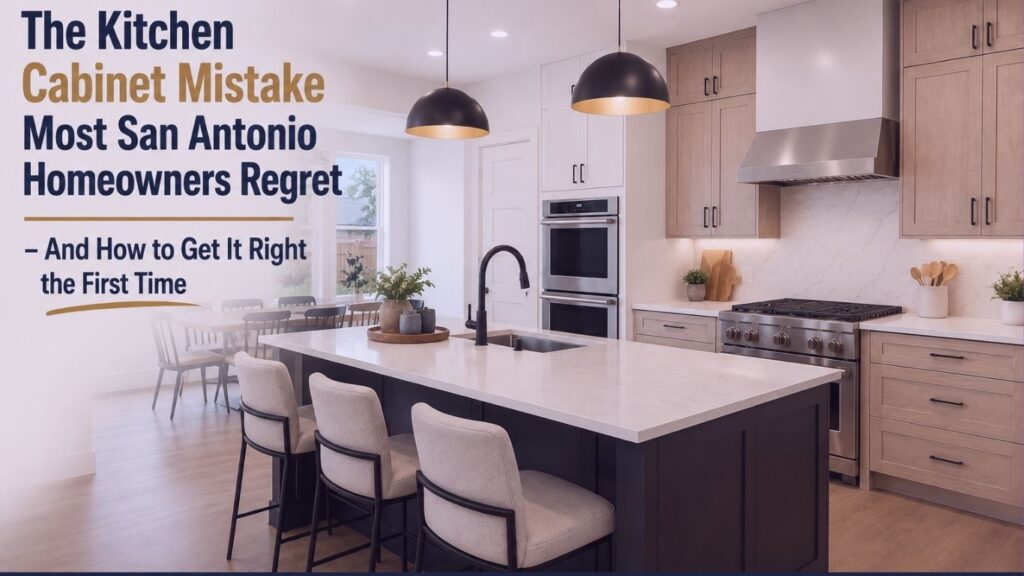
The Kitchen Cabinet Mistake Most San Antonio Homeowners Regret – And How to Get It Right the First Time
May 28, 2026
Choosing Kitchen Cabinets Is Harder Than It Looks:
Most people spend more time picking a paint color than they do thinking through their cabinet style. That makes sense on the surface: paint is cheap to change, and cabinets look like cabinets. But cabinets are the single most visible element in a kitchen. They set the tone for everything else. Get the style wrong and you’ll feel it every morning when you walk in.
This guide walks through the most common cabinet styles available in San Antonio, how to match them to your home, what they cost, and what questions to ask before you commit. If you’ve been putting off a kitchen refresh because the options feel overwhelming, this should help narrow things down.
Why Cabinet Style Matters More Than You Think
Here’s something most remodeling guides skip over: Cabinet doors are the first thing your eye lands on when you enter a kitchen. Not the countertops, not the backsplash. The cabinets. That means the style, finish, and color you choose will define how every other element reads in the room.
A white shaker cabinet makes a quartz countertop look clean and modern. That same quartz next to a dark wood European flat-front cabinet reads differently. It’s not that one is wrong. It’s that they tell different stories, and only one of those stories fits your home.
The National Kitchen and Bath Association consistently reports that kitchen remodels are among the top three home improvement projects that affect resale value. Getting your cabinet style right is not just about aesthetics: it’s a financial decision.
The Most Popular Cabinet Styles in San Antonio Kitchens Right Now:
Shaker Cabinets: The One That Works in Almost Any Kitchen
Shaker cabinets have been the dominant style in American kitchens for over a decade, and there’s a straightforward reason for that. The recessed center panel creates just enough visual detail without committing to a particular era or aesthetic. They work in farmhouse kitchens, transitional spaces, and even contemporary layouts, depending on the hardware you pair with them.
Cabinet Bazaar carries several shaker variations:
- Shaker White is the most requested finish. It makes small kitchens feel larger and pairs cleanly with quartz countertops in white or light gray.
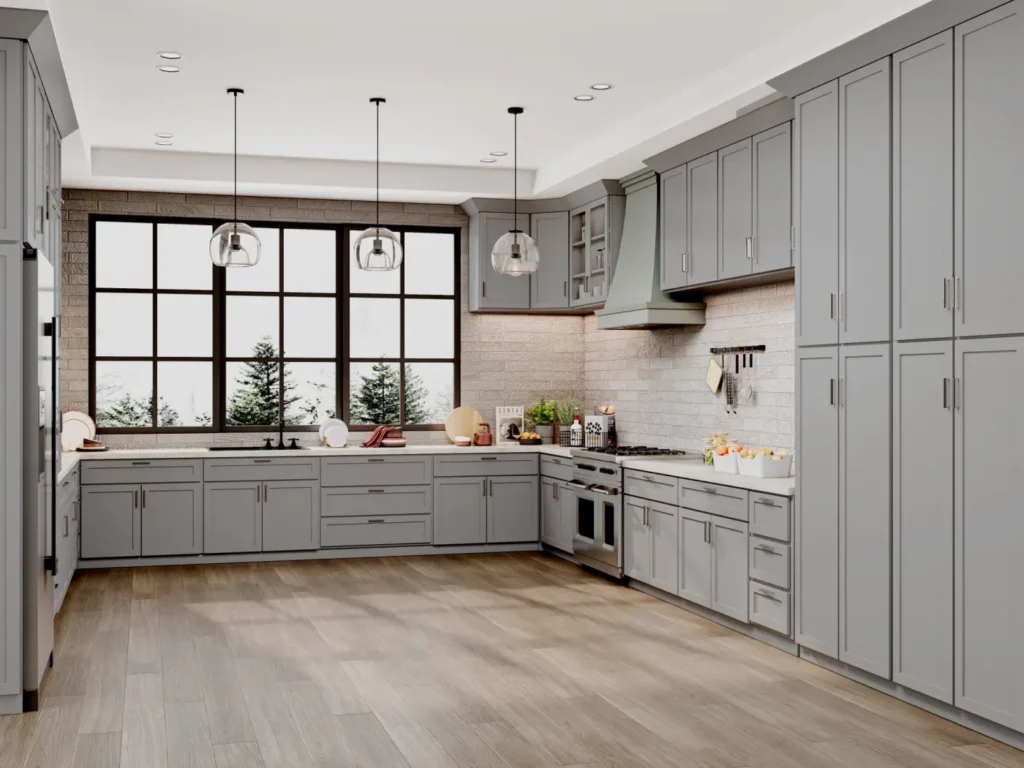
- Shaker Gray has become a strong alternative for homeowners who want the versatility of shaker without the starkness of white. It reads as neutral without feeling cold.
- Shaker Navy Blue is the choice for lower cabinets or kitchen islands where you want a color accent. It tends to pair well with brass or matte black hardware.
- Shaker Cinder is a deeper charcoal option for kitchens that lean toward a moody, dramatic palette.
- Shaker Wood brings in natural grain texture for a warmer feel without going full traditional.
If you’re not sure where to start, a shaker is usually the right default. You can see how these compare in the Cabinet Bazaar gallery before making a decision.
For more on what gray Shaker cabinets look like in San Antonio homes specifically, the Cabinet Bazaar blog post on gray shaker cabinets covers shade comparisons and cost in detail.
European Dark Wood: For Kitchens That Want to Make a Statement:
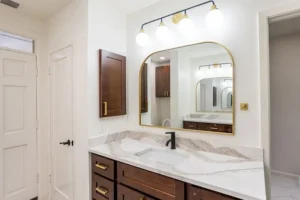
The European Dark Wood style is a flat-front cabinet with a rich, dark finish. No center panel, no decorative detail. The look is clean and intentional. It’s suited to kitchens that have strong architectural elements to work with: large windows, concrete or stone floors, and open-plan layouts.
This style tends to divide opinions. Some homeowners find it too dramatic. Others find everything else looks dated next to it. The honest answer is that it depends on what the rest of your space is doing. If your home leans contemporary, a European flat-front is worth considering seriously. If your home has traditional trim and detailed millwork, it may clash more than complement.
According to research published by Houzz, dark and two-tone kitchen designs have been gaining ground in recent years, with homeowners increasingly willing to use deep tones on lower cabinets while keeping upper cabinets light. That’s a direction the European Dark Wood style supports well.
Franklin Series: A Step Between Traditional and Transitional:
The Franklin collection sits between a traditional raised-panel look and the cleaner shaker profile. It’s a good fit for homes that have more detail in the moldings and architecture but where the owner doesn’t want to go fully ornate.
- Franklin White is the lighter option and tends to photograph well in kitchen listings.
- Franklin Gray brings a bit more warmth and works particularly well in kitchens with warmer-toned countertops.
Bristol Beige: When Warm Neutrals Are the Right Move
The Bristol Beige style tends to get overlooked in favor of white or gray. That’s a mistake for certain kitchens. If your home gets a lot of natural light, or if you’re pairing cabinets with a butcher block or wood-toned countertop, a warm beige reads better than a cool white. It also ages more gracefully in high-traffic kitchens where fingerprints are a daily reality.
Slim Green: For the Kitchen That Doesn’t Want to Blend In
The Slim Green option is more specific in its application. Greens have been a rising trend in kitchen design, and a saturated green cabinet done well looks intentional and current. It pairs well with brass hardware and light natural stone countertops. It’s not for every kitchen, but for the ones where it works, it tends to be the best version of that kitchen.
Matching Cabinet Style to Your Home’s Architecture:
San Antonio homes span a wide range of styles: 1970s ranch houses, newer suburban builds, Craftsman bungalows, Spanish colonial revival, and modern new construction in the Hill Country edge of the metro. The cabinet style that works in one won’t necessarily work in another.
A few general principles:
Ranch and suburban homes tend to do well with shaker styles. They’re flexible enough to work in either direction and won’t look out of place with standard ceiling heights and neutral finishes.
Craftsman and traditional homes lean toward the Franklin collection or a wood-toned shaker option. The detailed millwork in those homes wants something with a bit more visual weight than a flat-front cabinet.
Contemporary or new construction is where European flat-front and Slim collections have room to work. Clean lines, flat surfaces, and minimal hardware fit the aesthetic of those spaces.
Older homes with limited natural light often benefit from lighter finishes: Shaker White, Franklin White, or Bristol Beige. Dark cabinets can make a low-light kitchen feel smaller than it is.
The Cabinet Bazaar design service includes a 3D rendering so you can see how a specific style will look in your space before you commit. That service alone saves most homeowners from at least one expensive mistake.
What About Countertops?
Cabinets and countertops have to work together. Cabinet Bazaar carries both, which makes the pairing process easier. You can see the full countertop options alongside the cabinet styles you’re considering.
Some general pairing notes:
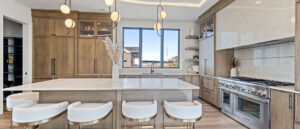
- White quartz with white shaker cabinets reads clean but can feel flat without texture somewhere else in the room. A wood-toned open shelf or a darker island helps.
- Granite with warm undertones tends to pair well with Bristol Beige or Franklin Gray rather than cool white cabinets.
- Dark countertops work well with light cabinets and vice versa. The contrast tends to define the space rather than letting it blur together.
According to Consumer Reports, quartz has become the most popular countertop material in kitchen remodels, outpacing granite in most regional markets. It requires less sealing and holds up well to daily use in high-traffic kitchens. That tracks with what most San Antonio homeowners are choosing right now.
For a more detailed breakdown of countertop options, the Cabinet Bazaar guide to the best kitchen countertops in San Antonio covers material differences, durability, and pricing.
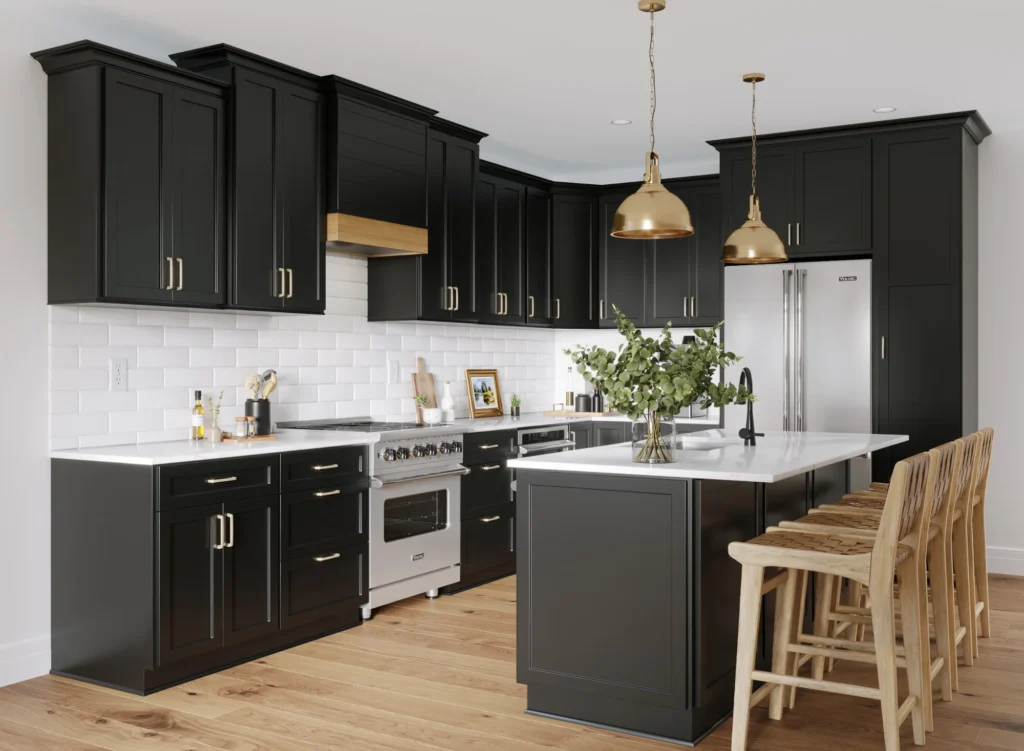
The Cost Conversation: What to Expect:
Cabinet pricing can feel opaque if you haven’t gone through a remodel before. Here’s how to think about it.
The industry uses a 10×10 kitchen as a standard baseline. It’s a hypothetical layout: two walls of cabinets, 10 feet each. Cabinet Bazaar’s 10×10 package starts at around $1,750. That gives you a baseline for comparison across suppliers.
Your actual kitchen will cost more or less, depending on the following:
- Total linear footage of cabinets. Most kitchens are larger than 10×10.
- Upper vs. lower cabinets and their configurations. Tall pantry cabinets, pull-out shelves, and corner solutions all affect cost.
- Finish and hardware upgrades. Some finishes carry a premium over base pricing.
- Add-on services. Assembly, delivery within Texas, and installation are separate line items. These are worth budgeting for upfront rather than treating as optional.
The Remodeling Cost vs. Value report published annually by Remodeling Magazine consistently shows that a mid-range kitchen remodel recoups a significant portion of its cost at resale. The numbers vary by region and market conditions, but the investment tends to hold better than most other remodel categories.
If you want a number specific to your kitchen, bring your measurements to cabinetbazaar.com/calendar and book a visit. You’ll leave with an actual quote rather than a guess.
What to Do Before You Visit the Showroom
A lot of people walk into a cabinet showroom with no information and leave overwhelmed. Here’s a short list of what helps.
Measure your kitchen. Even rough measurements give the design team enough to work with. Wall widths, ceiling height, and the location of windows, doors, and appliances are the key data points. Bring photos if you have them.
Know your deal-breakers. Do you need a specific amount of drawer storage? Do you have a corner that’s been poorly used for years? Are there appliances you plan to keep that have specific clearance requirements? Knowing your non-negotiables helps narrow the options faster.
Have a rough budget range in mind. You don’t need a precise number. Knowing whether you’re working with $5,000 or $25,000 or somewhere in between shapes which configurations make sense to explore.
Look at the gallery first. The Cabinet Bazaar gallery gives you a sense of finished kitchens. That’s more useful than looking at individual cabinet door samples because it shows how a style reads in context.
The Cabinet Bazaar blog post on what to expect from a kitchen cabinet showroom visit is worth reading before you go. It covers what questions to ask and what to watch out for.
For Contractors: The Cabinet Bazaar Program:
If you’re a contractor doing kitchen and bathroom remodels across the San Antonio area, Cabinet Bazaar has a dedicated contractor program with pricing and service benefits structured around high-volume work. Details and applications are at cabinetbazaar.com/calendar. The delivery service covering all of Texas makes it practical for contractors working across a wider radius.
Choosing kitchen cabinets comes down to four things: your home’s architecture, how the style pairs with your countertop, what you can comfortably spend, and what you’ll be happy looking at five years from now.
Cabinet Bazaar carries enough styles to serve most design directions, and they have in-person design help to make the decision easier. The 3D design service, the in-house countertop selection, and the full suite of delivery, assembly, and installation services mean you’re not piecing together a project from multiple vendors.
The showroom is at 5601 Bandera Rd, Suite 100, San Antonio, TX 78238. You can book a visit at cabinetbazaar.com/calendar or start with the online design tool at cabinetbazaar.com/home-cabinet-model if you want to get a feel for the layout before you go in.
FAQs:
Q1: What cabinet styles does Cabinet Bazaar carry?
Cabinet Bazaar carries a wide selection of kitchen cabinet styles, including Shaker White, Shaker Gray, Shaker Navy Blue, Shaker Cinder, Shaker Wood, Franklin White, Franklin Gray, Bristol Beige, European Dark Wood, and Slim Green. Each style comes in different finishes and configurations to fit a range of kitchen layouts and design preferences. You can browse the full collection at cabinetbazaar.com/cabinet-bazaar-category.
Q2: Does Cabinet Bazaar offer design help?
Yes. Cabinet Bazaar provides a professional 3D kitchen and bathroom design service. You can bring your measurements and photos to the showroom, and their team will help you build a layout and get a quote. You can also start the process online at cabinetbazaar.com/services_management/design-service. There’s no need to have everything figured out before you walk in.
Q3: How much do kitchen cabinets cost at Cabinet Bazaar?
Cabinet Bazaar uses the industry-standard 10×10 kitchen layout as a pricing baseline. Their 10×10 package starts at approximately $1,750. Final pricing depends on your specific kitchen layout, the number of cabinets, and any upgrades you choose. You can use the online kitchen design tool at cabinetbazaar.com/home-cabinet-model to get a clearer picture before visiting.
Q4: Does Cabinet Bazaar handle delivery and installation?
Yes to both. Cabinet Bazaar delivers anywhere within Texas and offers a professional installation service so your cabinets go in correctly the first time. They also have an assembly service for customers who prefer their cabinets pre-assembled before delivery. Details are at cabinetbazaar.com/services_management/installation-service.
Q5: Can I visit the Cabinet Bazaar showroom before buying?
Absolutely. The showroom is located at 5601 Bandera Rd, Suite 100, San Antonio, TX 78238. You can walk in during business hours (Monday through Friday, 8 AM to 6 PM; Saturday, 10 AM to 3 PM) or book a dedicated appointment at cabinetbazaar.com/calendar. Seeing cabinet styles in person makes a bigger difference than most people expect.